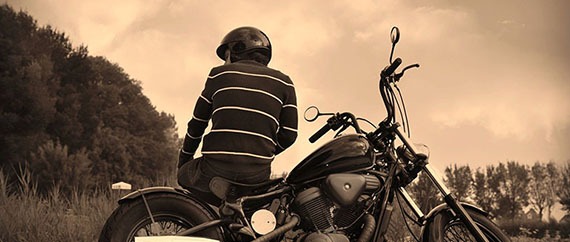
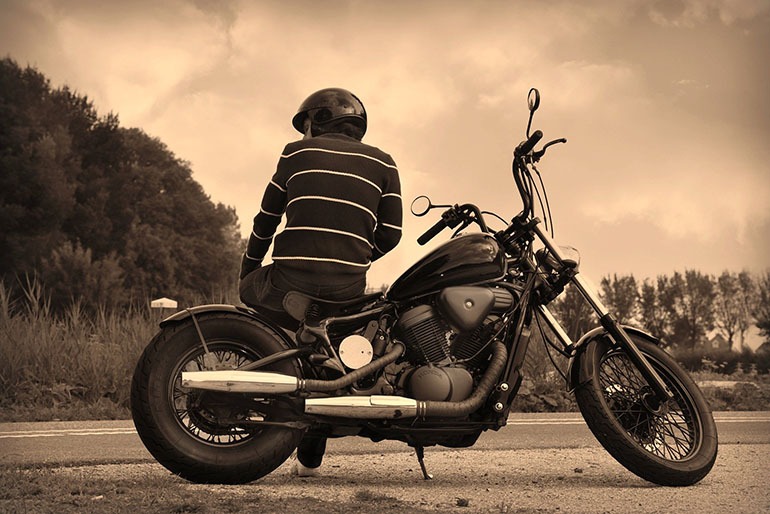
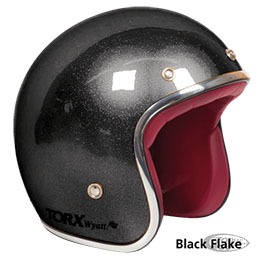
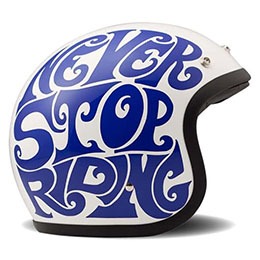
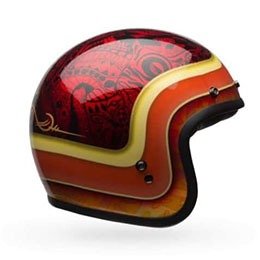
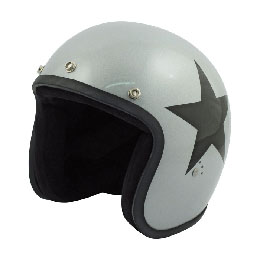
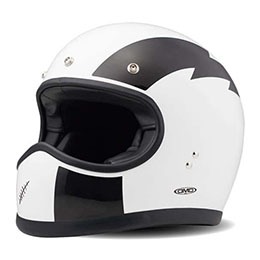
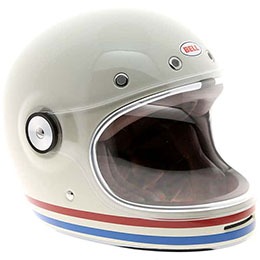
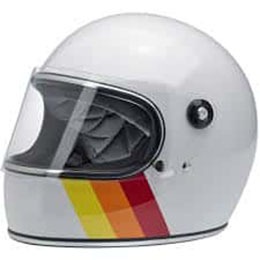
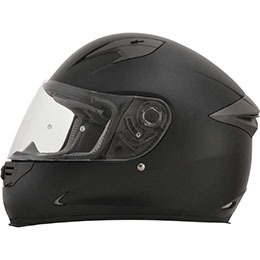
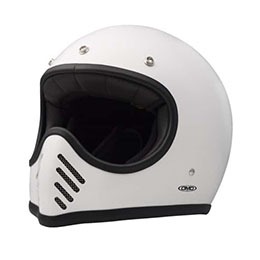
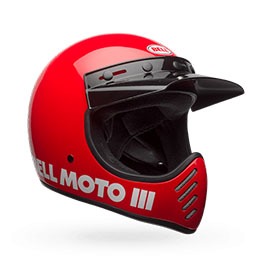
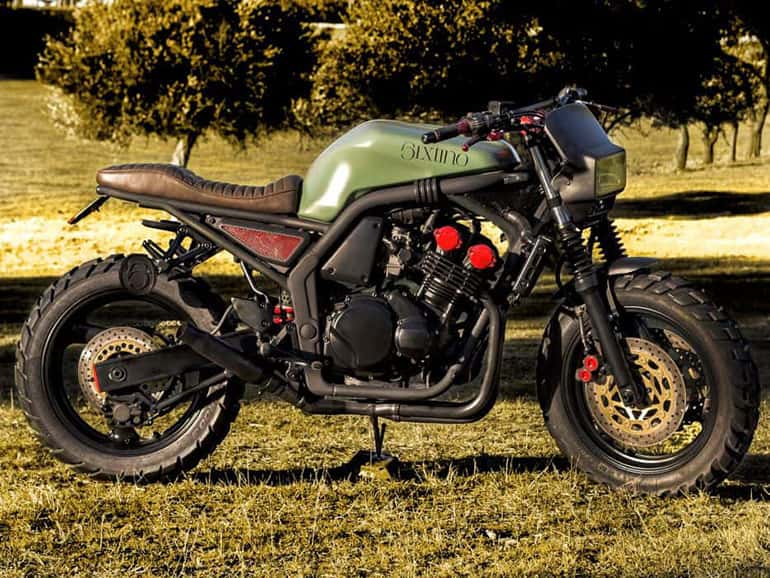
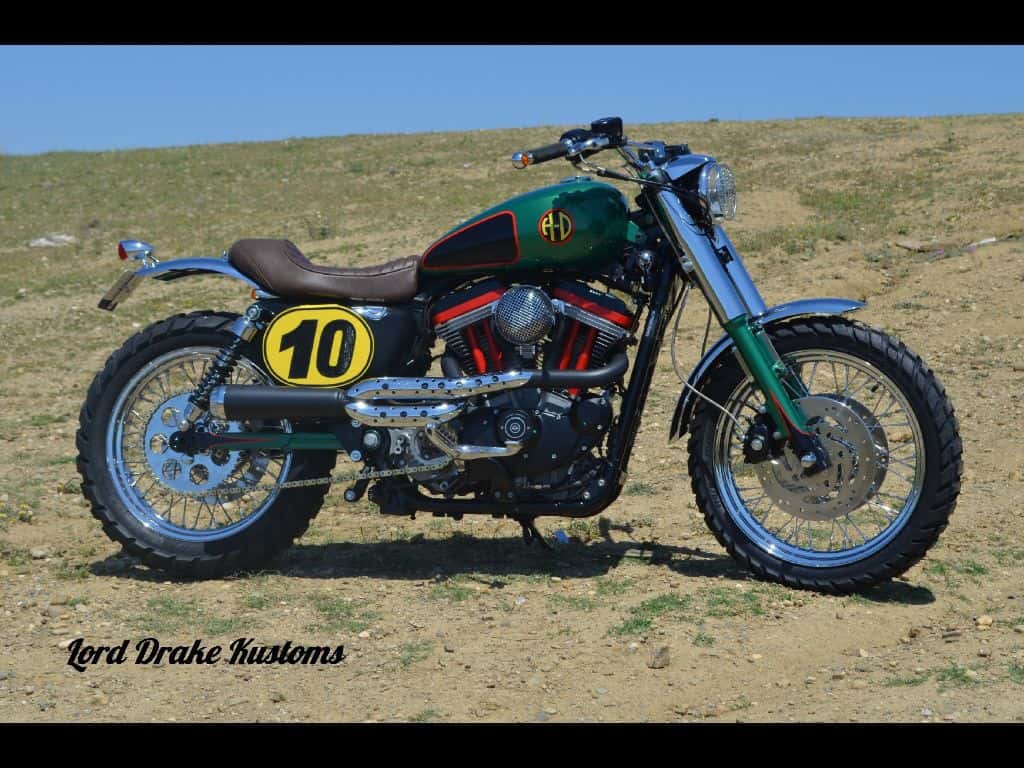
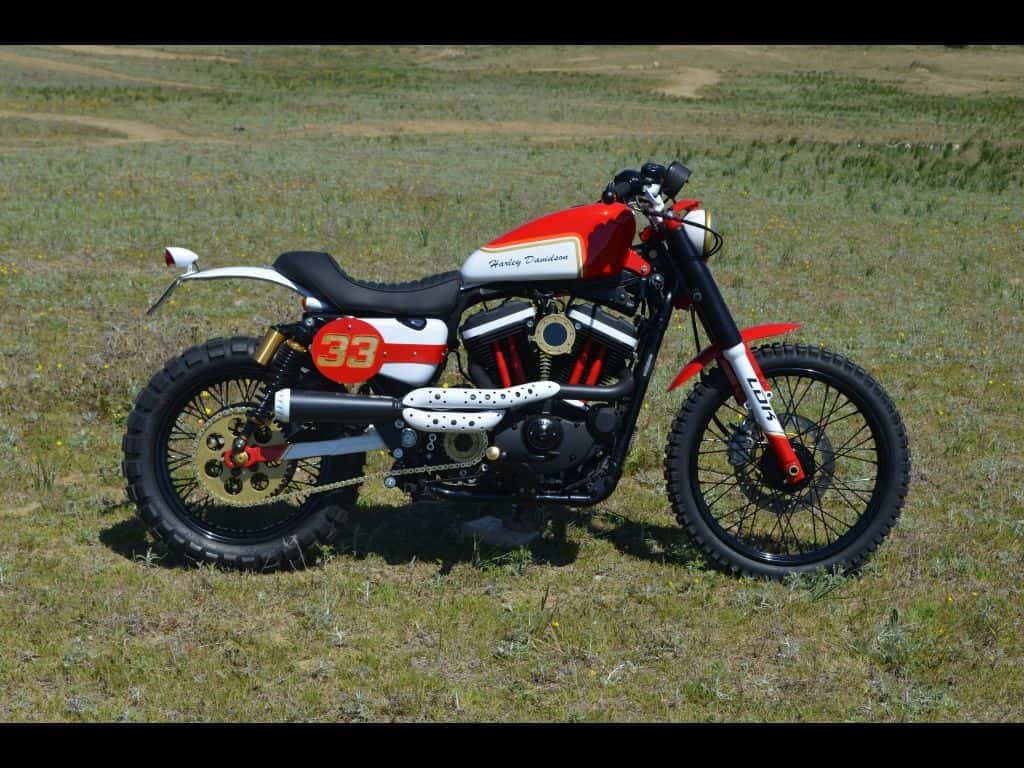
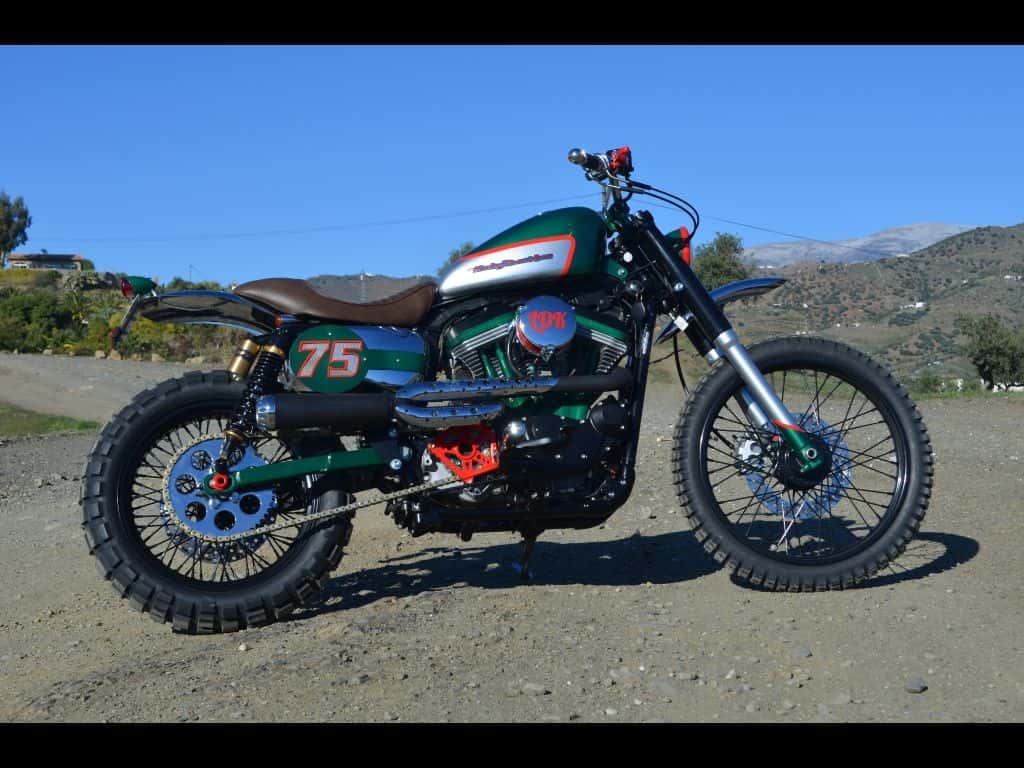
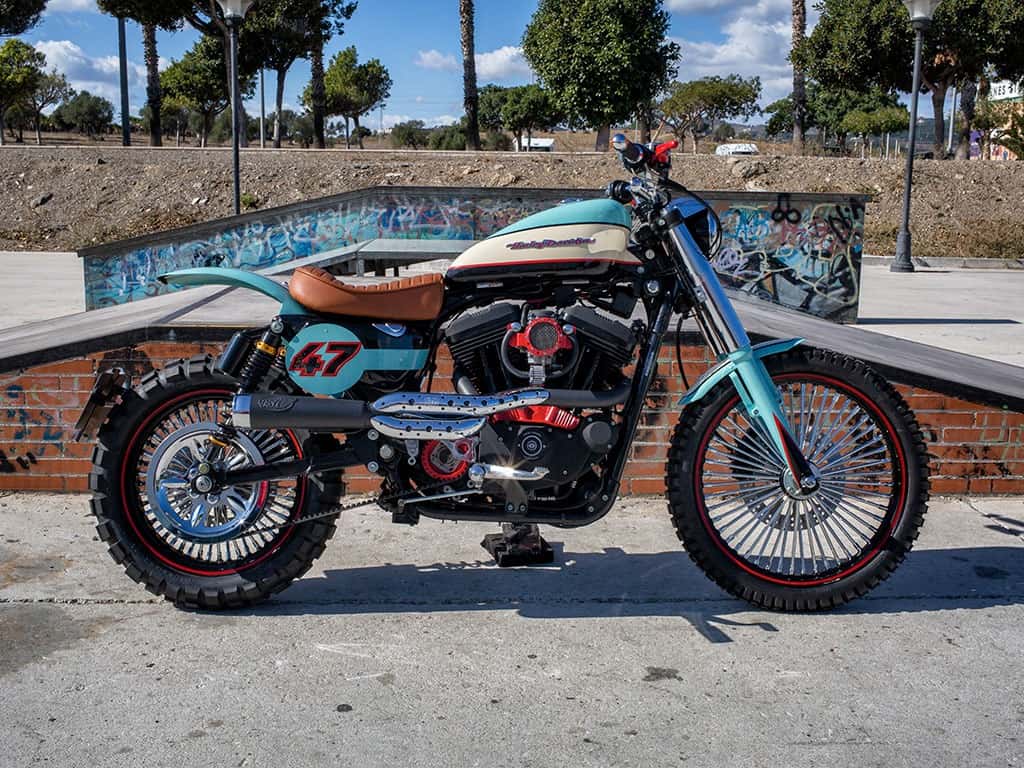
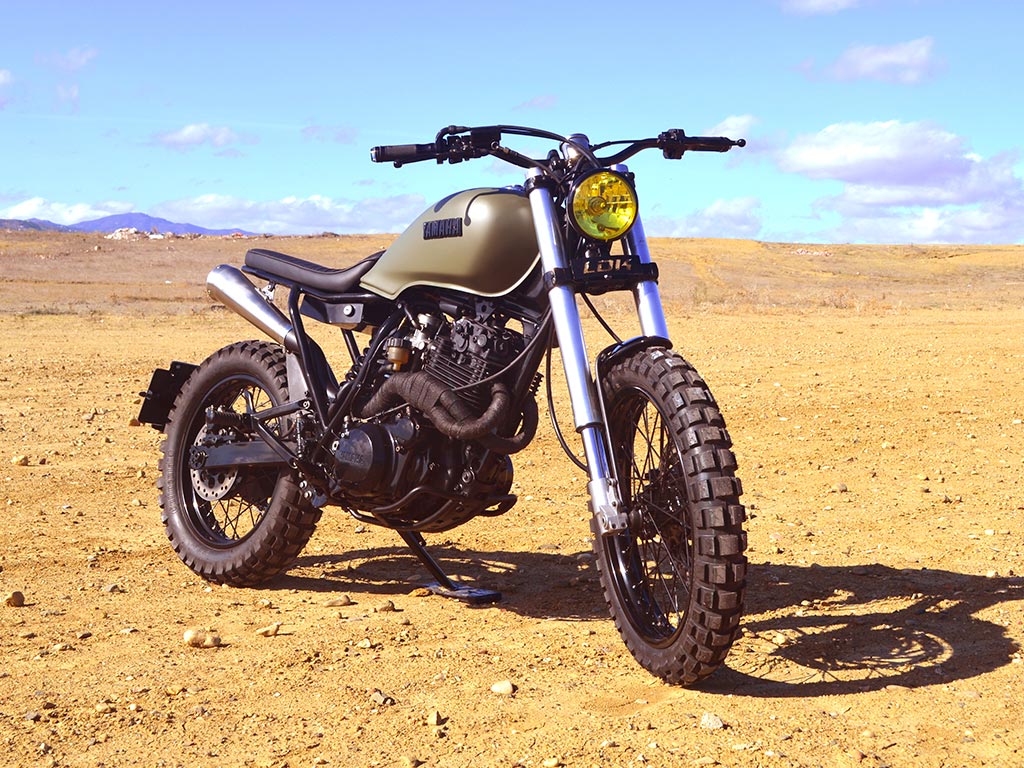
In addition to being a mandatory element, the motorcycle helmet is our best ally to avoid lesions and even death in case of accidents. In today’s article, we will see the essential characteristics that helmets must have for any type of custom motorcycle.
Buying a motorcycle helmet is an important decision for any biker. There are many types and a variety of helmet on the market, each one focused on certain circumstances. Today we are going to see which are the best helmets if you already own or are going to buy a custom motorcycle, be it Cafe Racer, Bobber, Brat or Scrambler.
What to keep in mind when buying a motorcycle helmet
There are many factors why choosing a helmet or another can be decisive when it comes to optimal driving on a custom motorcycle. In addition to protecting our lives, a helmet can prevent us from poor visibility, environmental noise caused by the wind or that all kinds of insects crash against our face.
Let’s look at some aspects to consider when purchasing a helmet.
That are homologated
This is a very important aspect and mainly affects the quality of the helmet. That this object has passed all security controls by an official body potentially increases our security. Keep in mind that for them to be officially approved, the helmets have undergone several stress tests. Each manufacturer is required to perform various durability and safety tests on each of its products.
Therefore it is very important that you look whenever the helmet has an official identifier or seal. In the case of the European Union, said seal is ECE 22-05. In other countries like the US they will carry others like DOT and Snell.
Helmet with a good fixation
It is useless to wear a good helmet if the fixation fails, that is, the straps and anchors are not good and the helmet can get out of the head.
It is essential that you check that the fasteners are reliable and fasten well to the chin.
Custom motorcycle helmets, as we will see later, are usually open. So good support is indispensable.
Choose helmet size
Like the support you have to choose the correct size. The helmet should fit us well in the head, without tightening, but without being too baggy so that we can get out. In addition, it must be comfortable to wear.
Helmet comfort
Other aspects to take into account regarding the comfort of a helmet for a custom motorcycle are ventilation and padding.
Many helmets have ventilation systems that allow air to enter inside. In this way we avoid excessive heat and sweat, especially on long trips.
Another interesting aspect is the inner padding. Ideally, this padding should be as comfortable as possible and sweat repellent. In addition, if it can be removed and put in order to wash it from time to time much better.
Visibility
Good visibility is a very important aspect also linked to safety. However, here we find a paradox; And the greater the visibility, the less secure the helmet is.
Open helmets or Jet type, are usually the most used in custom motorcycles. These helmets, having our face exposed, offer excellent visibility. However, for the same reason it exposes us to greater damage to our face.
On the contrary, full or closed helmets, protect us much better from any blow, but subtract us from the visibility field. With these helmets, the pilot should move his neck further to see at the sides or up and down.
Our advice is that depending on the trip to be made on your custom motorcycle, you use one or the other. That is, for short trips and at low speed, a Jet helmet can be more than enough.
But for long trips on the road or off-road and higher speeds it is much better to use a full-face helmet or one focused on enduro for motocross.
Helmets visors
Like the helmet itself all must be approved. There are many models according to the manufacturer’s brand, but they should all be protected against UV rays, be resistant to scratches and not soak easily.
Types of helmets for custom motorcycles
Although any approved helmet is used to drive a custom motorcycle, the truth is that aesthetics is important when we drive. After all, we have invested in giving a unique and special image to our cafe racer motorcycle. Are we not going to take care that the helmet is consistent with our motorcycle?
So, finally fashion generally imposes three types of custom motorcycle helmets that we will see below:
Jet type helmets
They are the most common in the custom world. Almost all the best known brands have models of this type. They are ideal to personalize them by painting or stickers.
Also and, as we have already mentioned above, they are the least safe. So it is advisable to use them at not very high speeds and on short distances.
These helmets have a very good visibility, since they keep our face exposed. They can be used comfortably with glasses and screens or protective masks can also be attached.
The integral helmets are closed. Offer a better protection of our head since they protect our face from possible blows.
They usually carry the retractable visor already incorporated into the same body. There are also many brands and variants. They are designed for longer trips and higher speeds.
In Lord Drake Kustoms we are fans of Steve McQueen. There has been no other actor in Hollywood who better embodies that love for the engine. He said on many occasions that he did not know if he was a competing actor or a acting pilot.
The fact is that Steve McQueen owes scenes that are already mythical in the history of cinema and motorcycling. That is the case of the famous final scene of The Great Escape, where he tries to escape with a Triumph (actually camouflaged as a German motorcycle of the time).
Final scene of “The Great Escape”
It was precisely during the filming of this film in the Bavarian region of Germany, when the causes for which, two years later in 1964, Steve McQueen and a group of friends participated in a motorcycle race in the German Democratic Republic.
The race in East Germany
Bud Ekins was a great film specialist and a great friend of Steve McQueen. They met when the famous actor moved to live in Hollywood. Ekins then had a small mechanical workshop in the San Fernando Valley, where he rented motorcycles to film studios.
Steve McQueen had him double for the most dangerous action scenes in many of his films. For example, Bud Ekins is in charge of making the jumps between the fences in the previous scene of The Great Escape.
It was during filming of that scene in the fall of 1962, when Ekins obtained permission to participate in the ISDT, a race organized in Garmisch-Partenkirchen, very close to Munich. In that race, Bud won his first gold medal.
When he returned to the shooting set, he told his friend Steve McQueen his exploits during the race and he was impressed. That was when they decided to set up an American team for the next race.
This team materialized two years later, in 1964. It was during the 39th edition of the International Six Days of Trials, held from September 7 to 12 in Erfurt, in East Germany.
The North American team was formed by Bud Ekins, Steve McQueen himself, Cliff Coleman and Dave Ekins (Bud’s brother). John Steen completed the group as a replacement pilot.
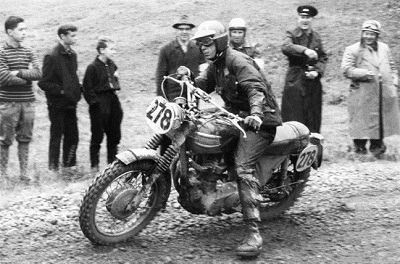
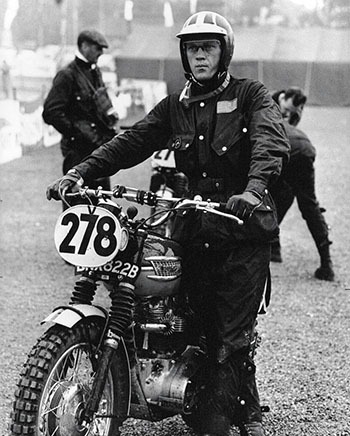
Steve McQueen with number 278 competing in the Erfurt ISDT in 1964
They brought the Triumphs from England, scrambler models adapted for that kind of motocross Olympiad.
The weather was very bad, with a lot of rain and cold. A very different environment than this team normally enjoyed in California. Nevertheless, the first two days of the championship managed to finish all their careers.
The third day, despite an improvement in time, was fatal for Bud Ekins and Steve McQueen, both had to leave. Ekins for breaking his ankle when he hit a rock and McQueen for smashing the front tire with another crash.
Coleman and Dave Ekins had more luck and managed to finish the race with a gold medal each.
Steve McQueen’s discovered photos.
This famous motorcycle race was widely documented in its day, especially by the French photographer François Gragnon and also by Lynn Wineland, one of the most famous racing photographers.
Recently, and through a German collector, new photographs of that event have been found. The photographer’s name is unfortunately unknown, but these images help us get a better idea of those days.
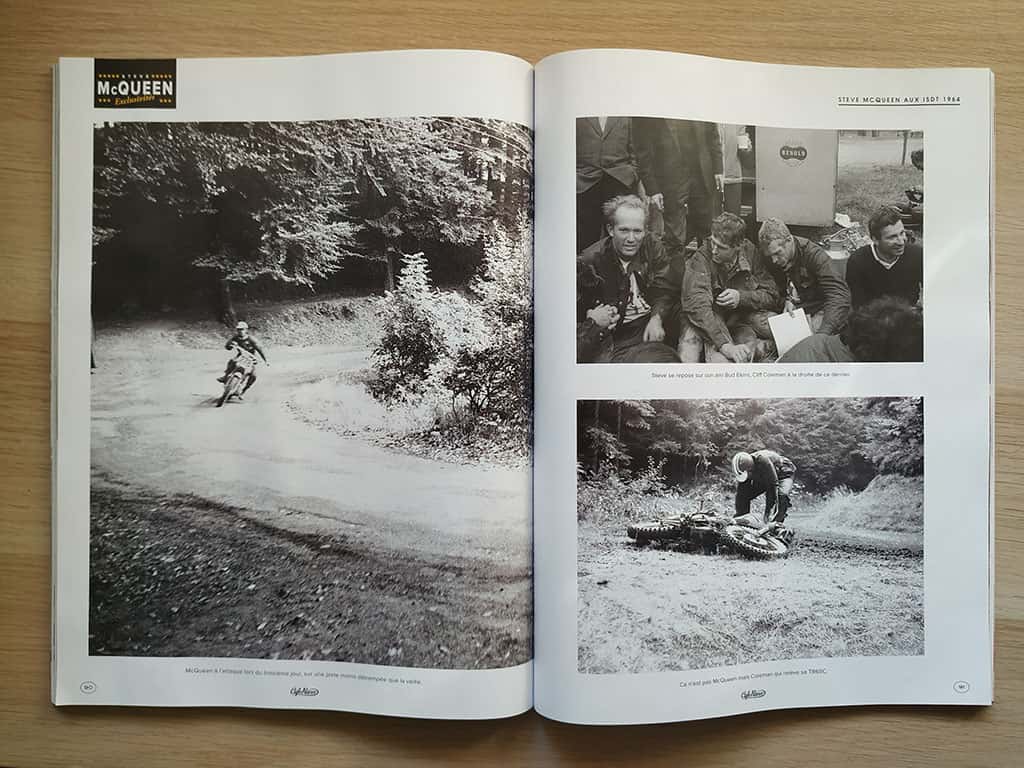
In its latest issue, the French magazine Cafe Racer on the world of custom motorcycle, has published a special report on Steve McQueen. In this dossier he develops several related articles and the publication of these anonymous photos.
Some of the unseen images published by the French magazine Cafe Racer
Our tribute to Steve McQueen
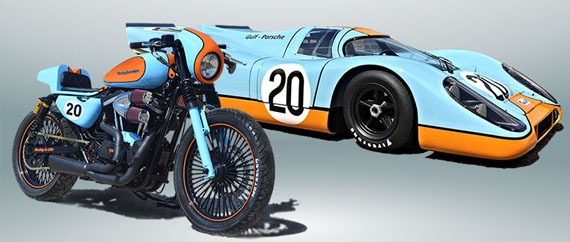
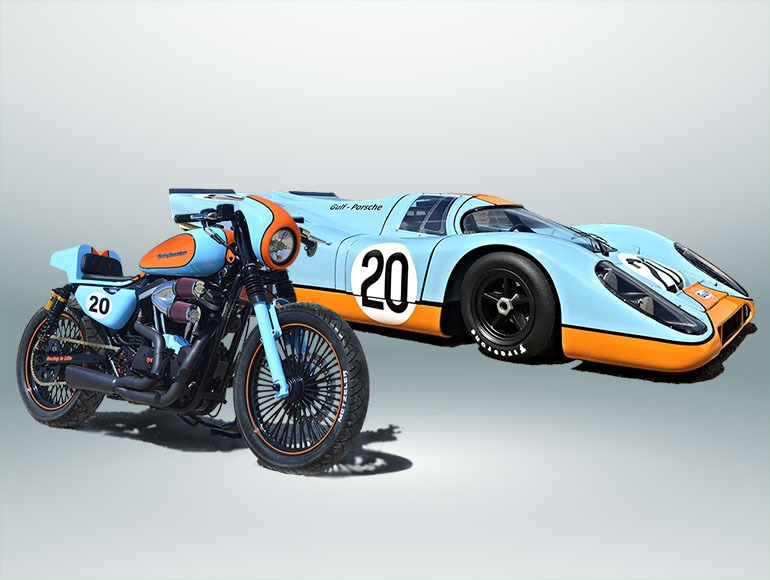
As we talked at the beginning, we are big fans of Steve McQueen. A few years ago we made a custom motorcycle tribute to his figure. For this we rely on his film about Le Mans.
In this film he was driving a Porche 917 K with the number 20. We wanted to pay tribute to him with a Harley Sportster converted to Cafe Racer. His name: Racing is Life.
“Racing is Life” next to Porche 917 piloted Steve McQueen in Le Mans.
This name is based on one of the most famous phrases of that movie: “Racing is life … anything that happens before or after is just waiting”.
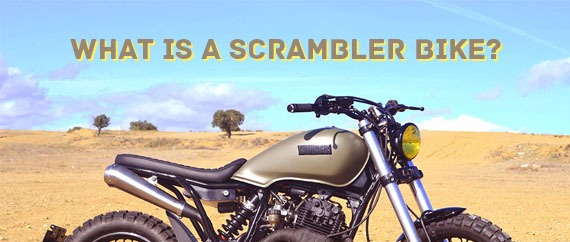
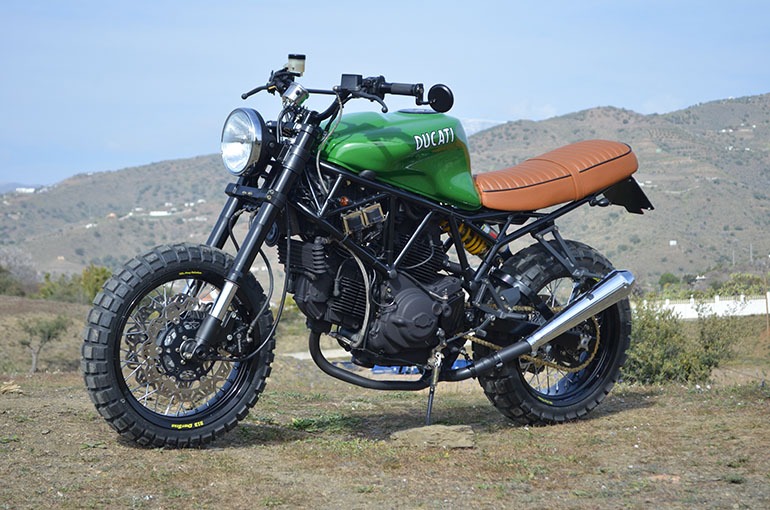
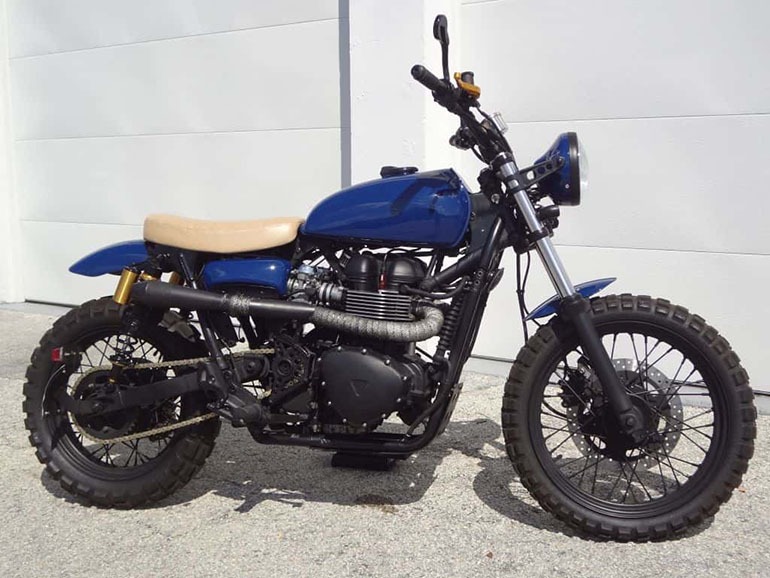
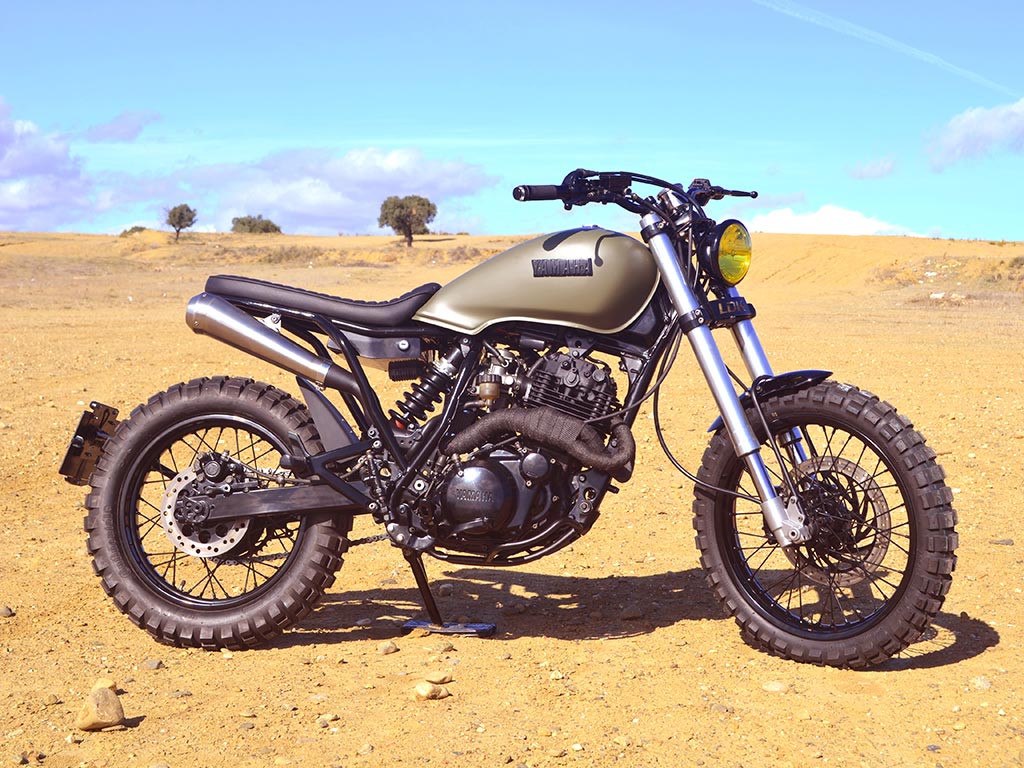
We continue with our new batch of articles where we try to offer an answer to the different styles of custom motorcycles. Today we have to talk about one of the most demanded styles in recent years: that of Scrambler motorcycles.
“Scramble” is a term that means mixing, but also “fighting” or “short path”.
Thus, it is easy to assume that this word defines a type of motorcycle that serves both road or unpaved roads (offroad).
Let’s see below how and why these custom bikes were born.
Origins of Scrambler motorcycles
Although its origin can be traced to the Second World War, it was in England in the 60s when we witnessed its rise. The stage was the same where the famous Cafe Racer were born.
As we explained in a previous article about the history of the Cafe Racers, in the 50s and 60s an urban tribe of young rebels appeared in London who modified their bikes to win competitions. They were the Rockers.
These boys competed with each other with their custom bikes both in short journeys and in more official competitions, many of them held on the Isle of Man.
Many of them thought about shortening cross-country paths in their careers. That is why they put their bikes back in their garages to adapt them to the country environment.
It was in this way that those motorcycles evolved to what is now known as Scrambler style.
Already in the 60s and 70s, official motocross, enduro and trial competitions began to be held. These competitions help you to the popularity of this type of motorcycle.
Also recognized brands of motorcycle manufacturers began to market models based on this style such as Ducati or Triumph.
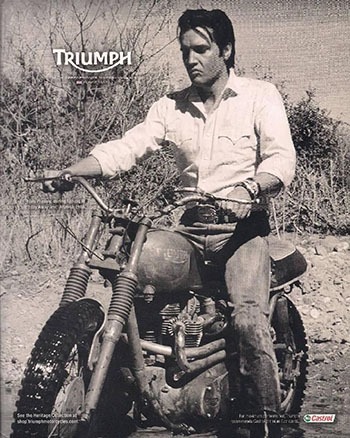
Cinema and music also helped to make Scrambler motorcycles known. It is only necessary to think about the famous scene of the escape of Steve McQueen in the movie The Great Escape or Elvis Presley playing an advertisement for Triumph Scrambler.
Steve McQueen in one of his races with a Scrambler
Elvis Presley poses for a Triumph Scrambler ad
Let us now know the characteristics that define this style.
Scrambler style features
We have already seen that to be a Scrambler motorcycle it is necessary to be modified for offroad roads. But for this to be possible, it is necessary that this motorcycle be light, robust and reliable.
Let’s see how these three essential factors are achieved:
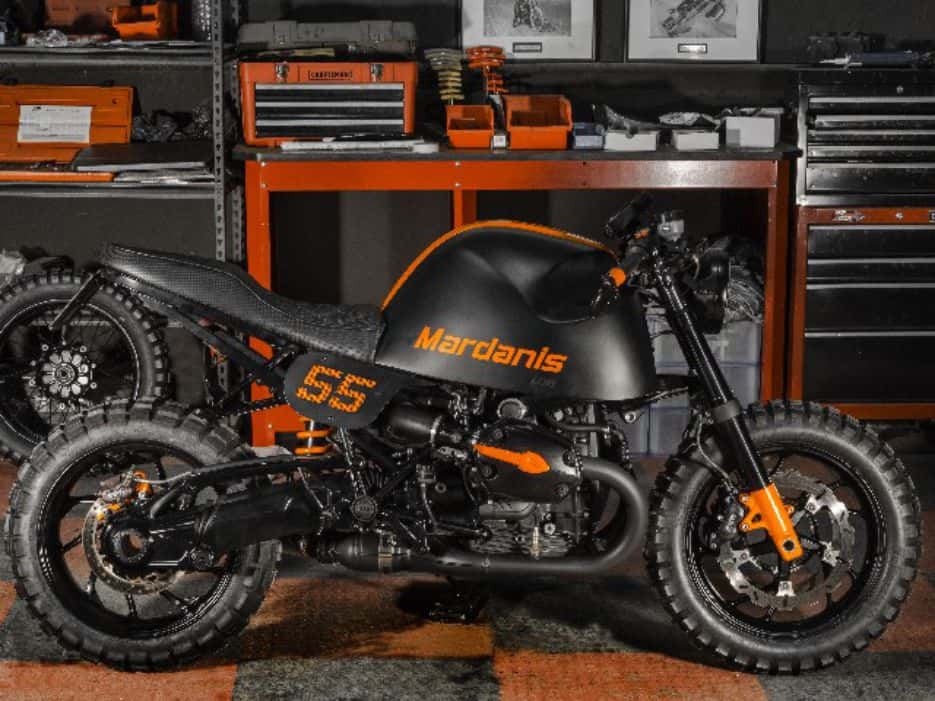
Simplicity. Scrambler motorcycles are not designed to have all the details, their adventurous character drives them to keep only those essential details.
Weight reduction. Like their cousins, the cafe racers, these bikes need to do without unnecessary items.
Reduced tank. It is one more way to reduce the weight of the motorcycle.
Taco wheels. It is logical that a motorcycle that is destined to roll on dirt, dust, water or mud roads should have an excellent grip.
Padded seat. The comfort and the reduction of the impact before the bumps of the road are grateful for the pilot.
Wide handlebars. The maneuverability and a more comfortable position for the pilot was improved.
Exhaust pipe elevated. In this way it is avoided that you can suffer damage from the impact of stones due to the irregularity of the terrain.
Raised fenders. To prevent dirt and dirt from accumulating on the wheels.
Number plate. This detail is given by its competitive nature.
Today, custom motorcycles in Scrambler style are still one of the most demanded by our customers. This is due to its versatility by being able to have a motorcycle valid for both road and to get lost on unexplored roads.
Are you a Scrambler motorcycle lover? Tell us in the comments.
And if you want to have a motorcycle like this, we can help you with the project. You can bring us your motorcycle to do the transformation or we can also look for one. Contact us and we will advise you without any commitment.
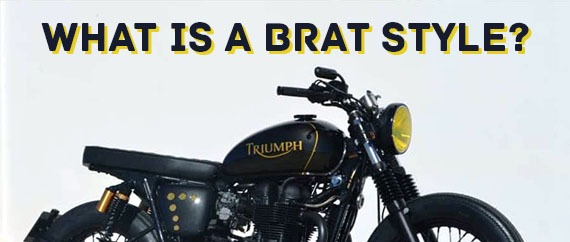
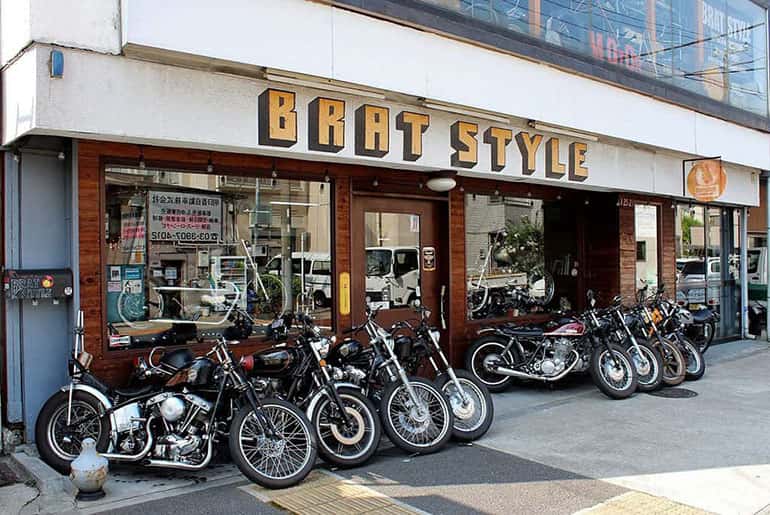
The Brat style was born in Japan in the 90s, so it is also known as Japan Style. Its creator, Go Takamine, mixed the concepts of the english Cafe Racer and american Bobber to create a lighter and more urban motorcycle.
They are usually custom motorcycles with a retro or vintage air, although today it is usual that this rule does not have to be fulfilled. Like Cafe Racer, they dispense with any added element, maintaining a minimalist appearance. However, it differs from the latter in that the comfort of the pilot also prevails.
Already in his workshop, Takamine developed a “modus operandi” of a different design than usual that ended up being imitated throughout the world.
This style was democratized under the name of bratstyle, so the name of its store “Brat Style” ended up becoming generic.
Brat style features
As we have said before, the Brat style collects elements of both Cafe Racer and Bobber. However, it brings its own differences, which makes these custom bikes a style in its own right.
Let’s look at some of the common features of Brat style motorcycles below.
Based on medium displacement motorcycles. The first Brat-style models that Takamine manufactured, were based on Japanese brand bikes. But the main reason for choosing medium displacement bikes is that the result is as light as possible.
Low Bikes. It is usual to lower the suspensions to balance the shape of the motorcycle, so that the line under the tank and the seat is as parallel to the ground as possible.
Wide tires and equal diameter to each other.
Spoke wheels.
Small diameter headlights.
Fine and flat two-seater seat. These bikes admit companion, since their seat is quite elongated and flat. They also tend to dispense with any type of tail.
The handlebars are usually higher than those of the Cafe Racer (designed for better aerodynamics with the inclined position of the pilot). In the case of Brat Style motorcycles, enjoyment and driving comfort prevail.
In summary, the Brat style looks for a fun, urban motorcycle with good maneuverability and retro look.
Brat Bikes today
As with other styles such as Cafe Racer, Bobber or Scrambler, today they mix with each other or provide new details.
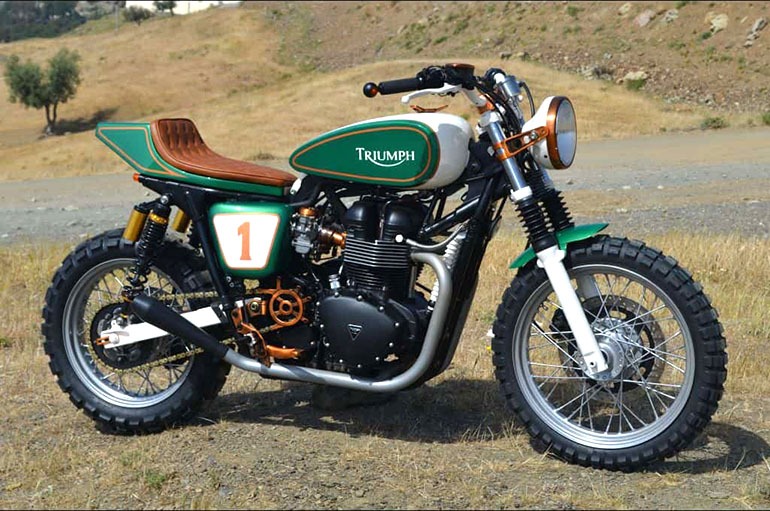
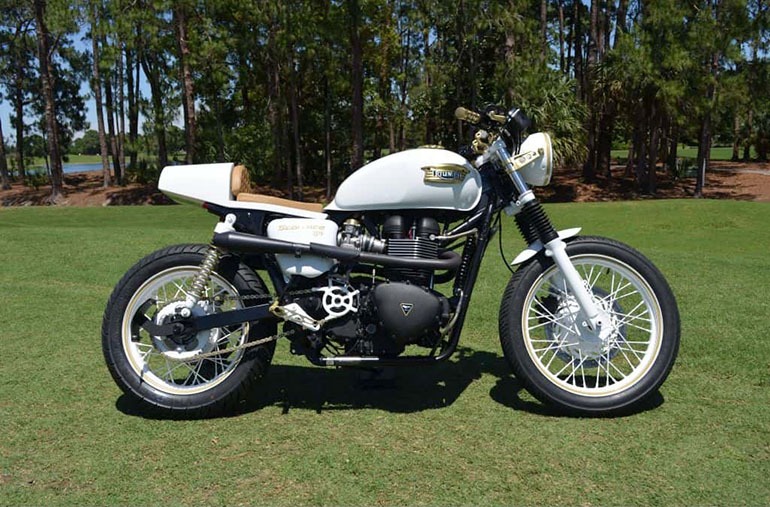
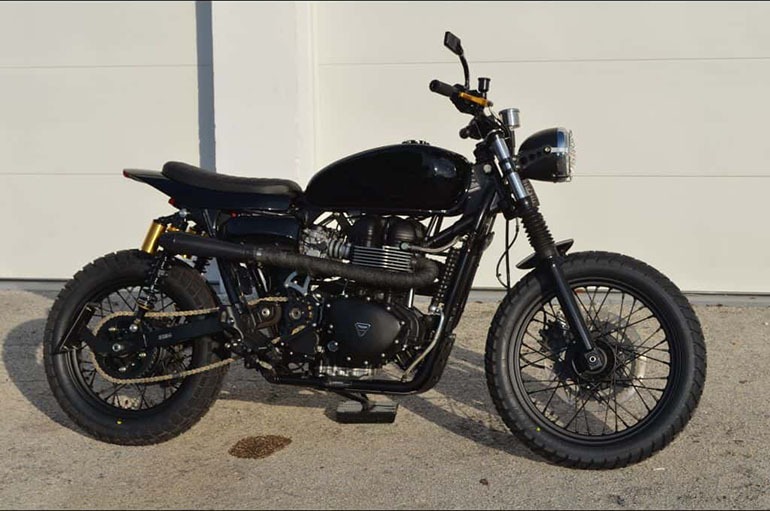
This custom Triumph motorcycle like Cafe Racer and Brat was commissioned by Tom Kaulitz (leader of the Tokio Hotel group) and made a video where you can see him in action.
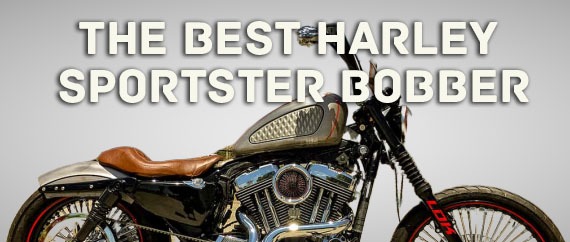
The Sportster models of the famous Milwaukee manufacturer have always been an excellent base for transforming these motorcycles into Bobber style.
Lord Drake Kustoms has made various customizations from this model to create some of the best Harley Sportster Bobber.
Recently, we published an article where we explain exactly what the Bobber style is. Today we are going to see how the Harley Davidson Sportster range has evolved over the years.
The history of the Harley Sportster
The Sportster model is one of the most famous of the Harley Davidson brand. This motorcycle has been manufactured tirelessly for over 60 years with the code XL (eXperimental Light).
This code refers to its ease of handling and modification, which makes it a perfect candidate to be customized.
The previous features combined with its low price, made it become an instant success, being a perfect model to enter the brand.
Since then it has not stopped evolving to this day, creating mythical bikes such as the Sportster XR 750 in the 60s, which won countless races.
Over the decades, it has continued to gain popularity, while evolving at the pace of the improvements offered by new technologies.
Some of the best-known Sportster models are the Sportster Iron or the Harley Davidson Forty-Eight. The latter with a factory Bobber air.
The Harley Sportster Bobber Motorcycles by Lord Drake Kustoms
Let us now review the best Harley Sportster Bobber style motorcycles that Lord Drake Kustoms has made in recent years.
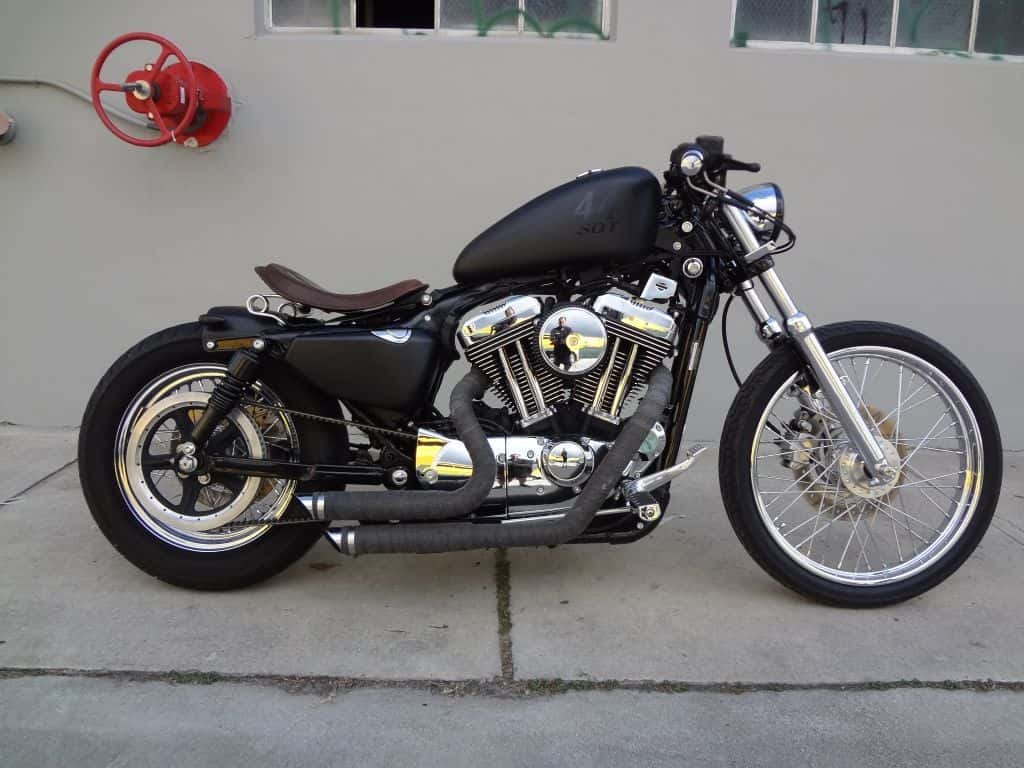
Sportster “SDT”
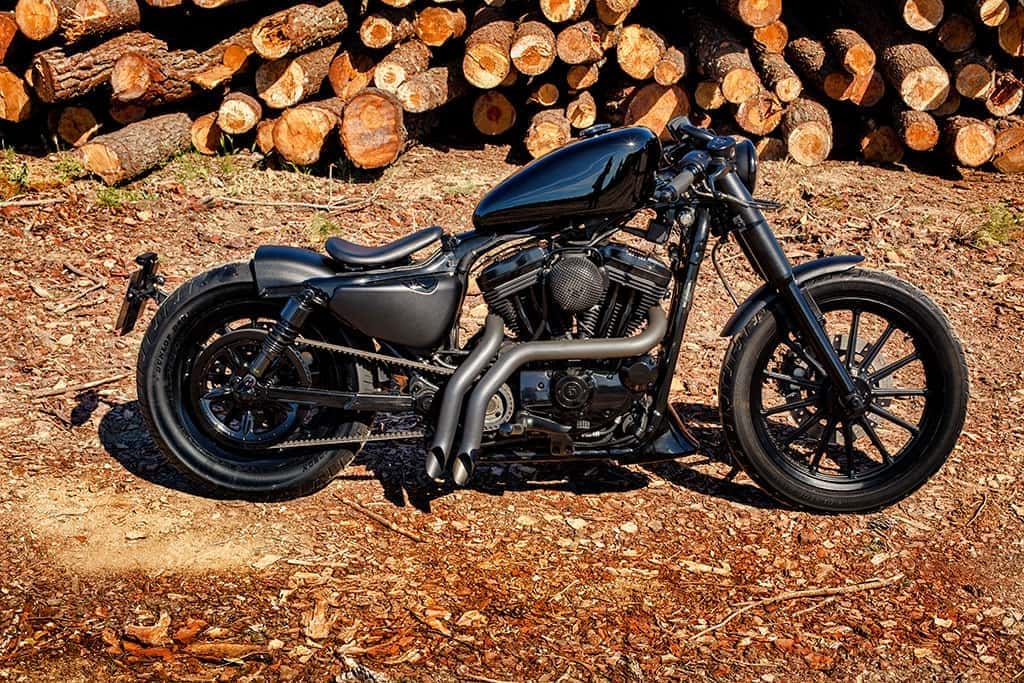
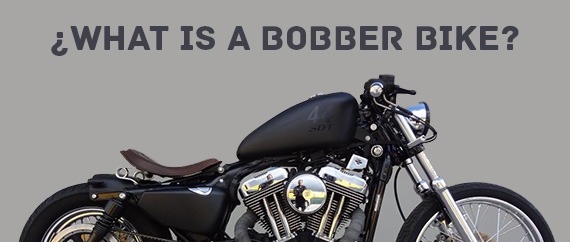
This was one of the first Bobber air motorcycles that LDK customized. Totally black combined details in gloss black and matte, make it a most elegant Bobber. It is built from an HD Sportster 1200.
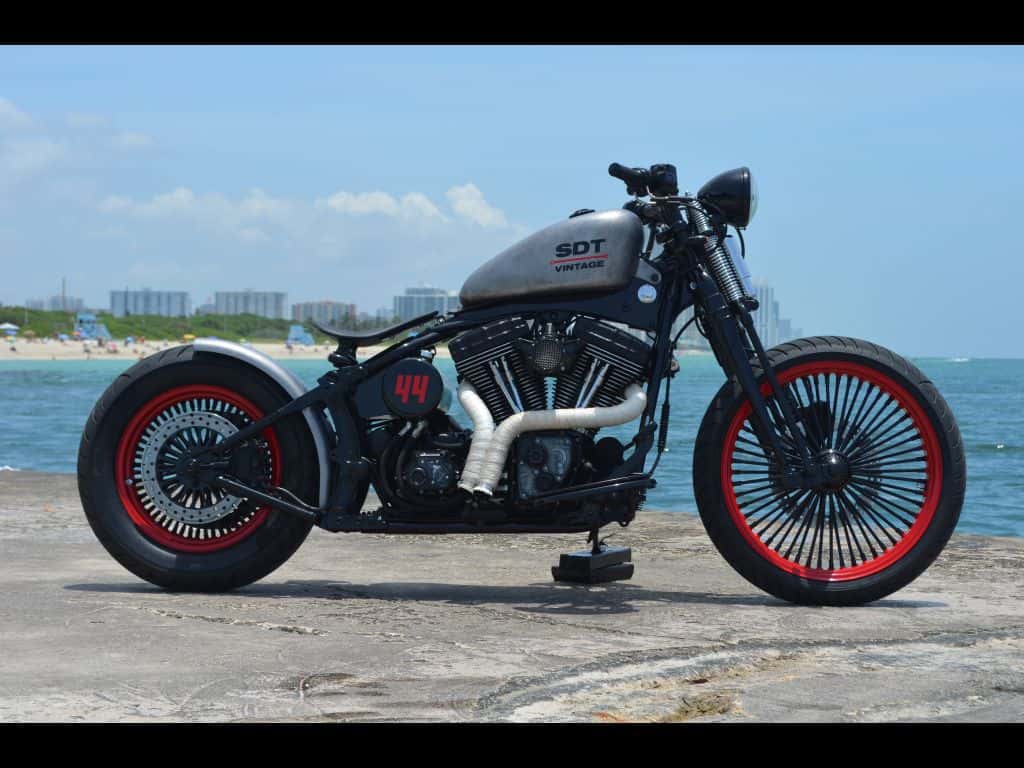
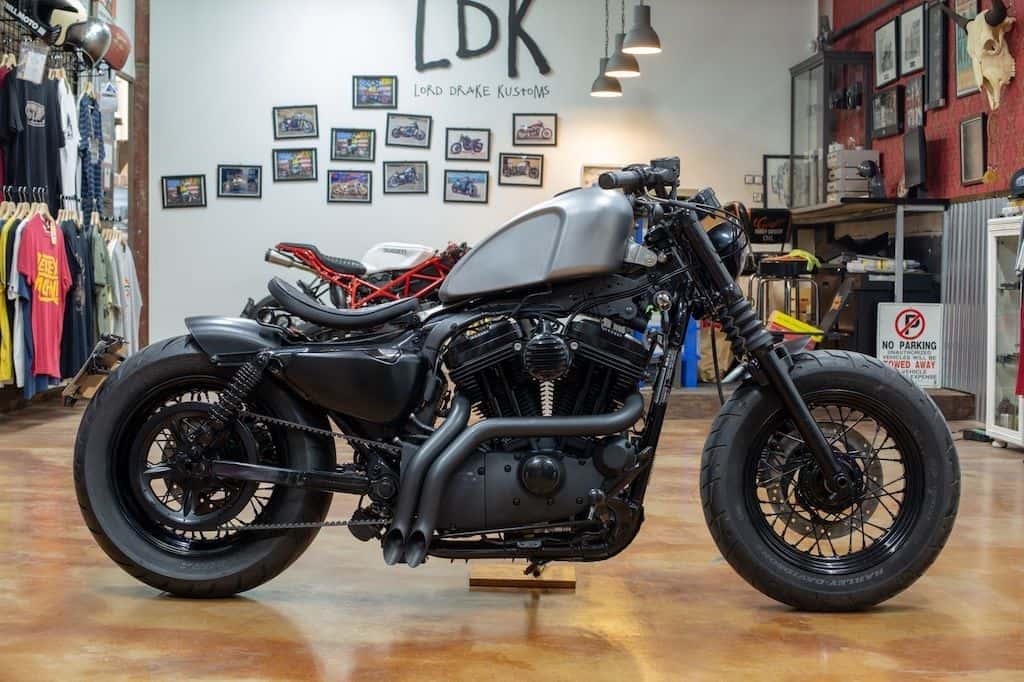
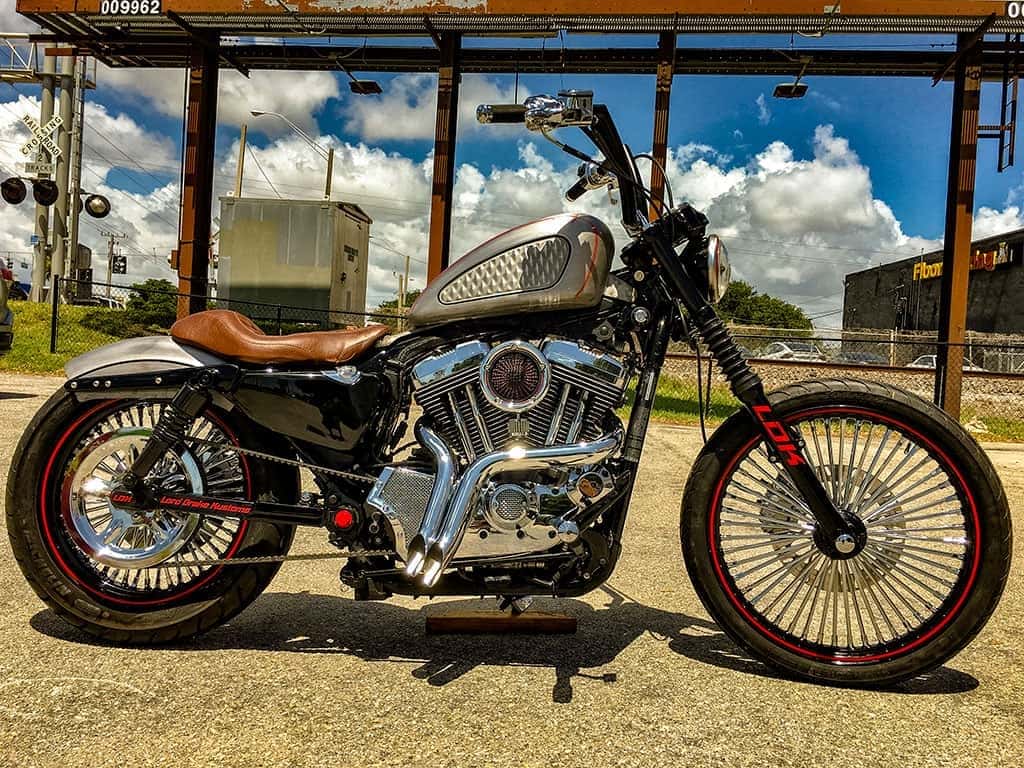
Based on a Softail Springer, this modified motorcycle was created in the workshops that LDK has in Miami (USA). This time gray predominates over black and its red accents give it a sportier look.
With a more “casual” and at the same time elegant style for its combination of black and white colors, this motorcycle was created to be enjoyed by all ages.
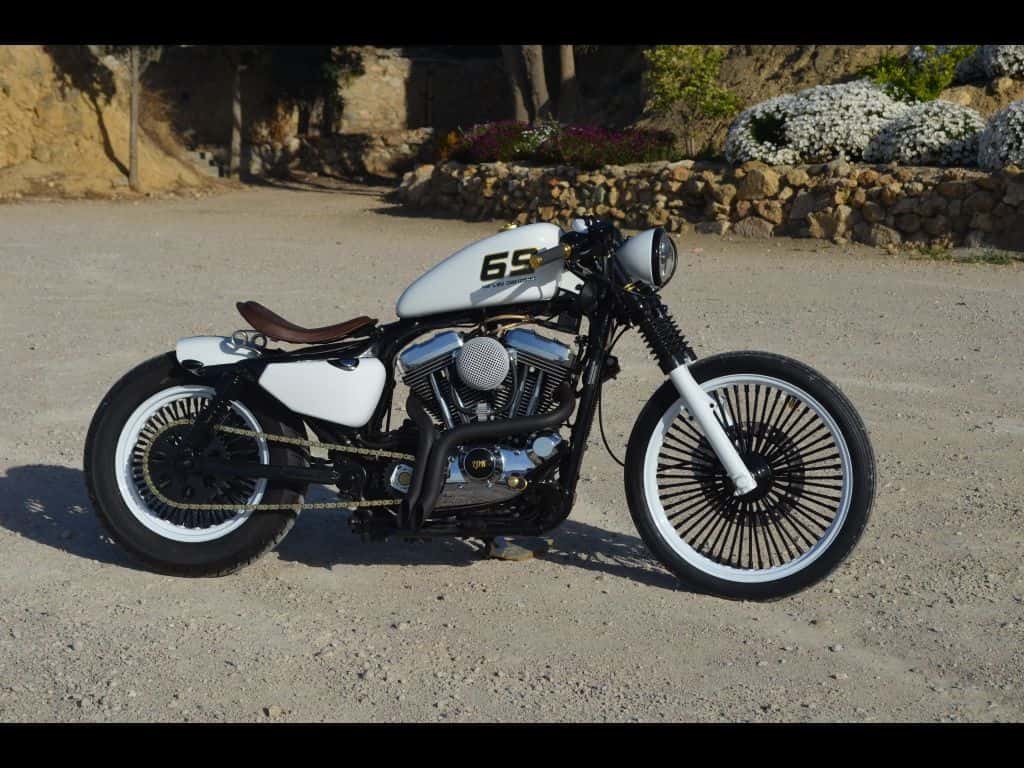
Sixty-Nine
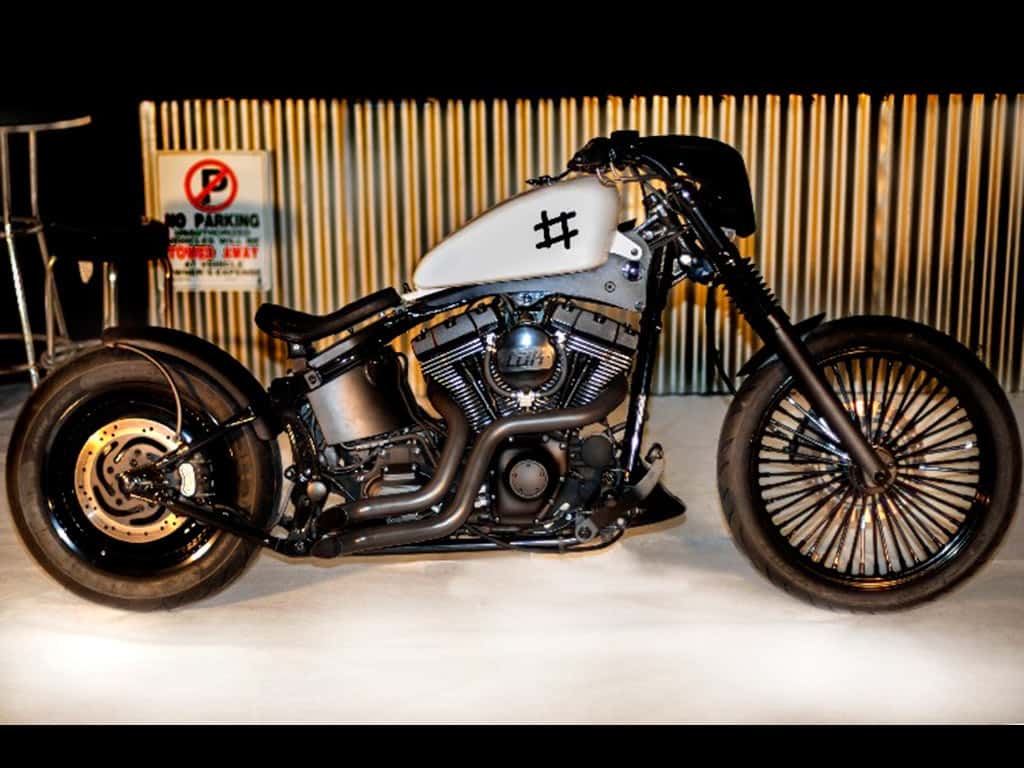
Trending Topic
Also in black and white, it is perhaps one of the most spectacular motorcycles that Lord Drake Kustoms has made in these years.
His name comes because it was a commission for a store with that branding. But at the same time it adjusted perfectly to his spirit, since it was a motorcycle that gave much to talk about.
The story of this custom motorcycle has a special peculiarity, and its transformation was carried out in just 48 hours. The basis for modification was a Harley Sportster 1200 C.
This project was carried out in Miami and was made for a good cause. The finished motorcycle was donated to raise funds for Nicklaus Children’s Hospital and the Tears and Favors Foundation at the Miami Fashion Week Charity Gala 2019.
The Bobber style is, together with the Cafe Racer and Scrambler, one of the most demanded when making a custom motorcycle. Born in the first half of the twentieth century, Bobber motorcycles accompanied the beginnings of custom culture in North America.
Although it is usually located in the 40s, its origins really go back to the 20s. Looking for an improvement of the performance and style of the Harley-Davidson “J” of that time, the “bob-job” style appeared in United States.
This style was characterized by the suppression of any expendable element to relieve the weight of the motorcycle. From there it was modified to lower the height of the seat and shortened the distance between the wheels, creating that typical diagonal line.
These types of transformations were applied especially for motorcycle racing in the 30s. Since then, this style evolved and was simply called “Bobber”.
In the 40s, especially after the Second World War, the culture of motorcycle transformation began to settle. Thus, the characteristics of this Bobber style were applied to American motorcycle models such as Harley-Davidson, Indian or Triumph.
Let’s see in depth what were the characteristics of these Bobber motorcycles.
Keep in mind that the following characteristics are general and are not always met when customizing a motorcycle in this Bobber style.
The diagonal line
It is the first track to recognize a Bobber motorcycle. Due to the low height of its seat, the peanut-shaped tank and the high handlebar, a very characteristic ascending line of these models is created.
Also, starting in the 40s and 50s, the wheels begin to separate (unlike in the beginning), which is why they are often called their “long and low” shape.
As we said before, it is one of the characteristics inherited from its early days. Making the bike less heavy was essential to gain speed.
Already in the 40s and 50s, the soldiers who returned from the war sought to modify their motorcycles to have the maneuverability of the motorcycles used in the front. The commercial bikes of those times were much heavier.
Use of classic engines.
It was usual to mount classic motorcycle engines to those of that time, especially Harley-Davidson engines. Some of these iron hearts were the famous OHVs like the Knuckleheads or Panheads.
It is also a very characteristic aspect of the Bobber. It is usually a triangular single seat. Docks under the seat cushion road bumps. Being low, forces the pilot to keep his back straight.
Fuel tank
They are usually of low capacity, but the characteristic is their ascending form, in the form of a peanut in some occasions.
The high handlebar
It is another factor, next to the low seat, that forces a straightness in the rider’s back when driving this motorcycle. They are usually high handlebars, also called “hang monkeys”.
They are usually quite separate and have the same diameter. Lightning radios and thick tires are also often used. Typical tires in this style are white-painted tires on their sides.
The Fenders
At first the fenders were non-existent (especially the front ones), but today they are optional. Of course, if you choose to include them on the motorcycle, they are usually quite short and very close to the tire.
The Exhaust pipes
If you’ve ever heard a Bobber motorcycle accelerate, you may have noticed the noise they make. That is because their exhaust pipes are usually open and trimmed.
The painting
As a general rule it is normal to remove the chrome plating to leave them in matt. In this way, it is easier to apply paint on certain parts of Bobber motorcycles.
If you like Bobber motorcycles, you’re in luck. Lord Drake Kustoms is the best motorcycle workshop in Malaga and Miami, specialized in Custom Motorcycles, Cafe Racer, Scrambler, Bobber and any other style you can imagine.
In addition, we are experts in Harley-Davidson, BMW, Ducati and many more.
If you want to have your own Bobber motorcycle or any other style, do not hesitate to contact us without obligation. We also have Bobber for sale!
In our previous article we saw how the first Harley Scrambler bikes from Lord Drake Kustoms gained worldwide recognition.
Next we will tell you how the custom bikes called Bultracker were born and why they became a brand in itself for Lord Drake Kustoms.
The arrival of the Bultracker
In 2015, Fran Manen decided to continue with the scrambler motorcycle project, but this time he wanted to do something with a more retro look. It was then, when he remembered the Spanish motorcycles Bultaco, specifically in his model Bultaco Matador. And hence the name of Bultracker emerged to define these custom bikes that would arrive later.
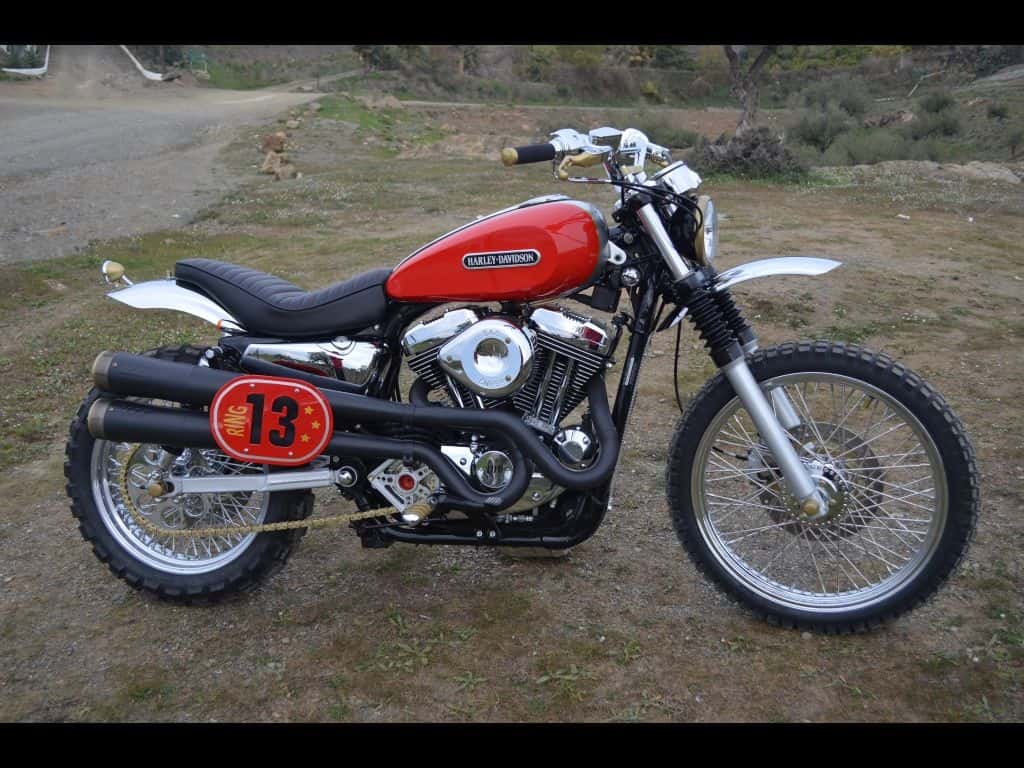
The first was the Bultracker Ring 13, which ended up doing with a good Belgian friend (owner of an HD dealership in Brussels). The name Ring 13 comes from the location of that dealership.
Bultracker Ring 13, the first LDK Bultracker
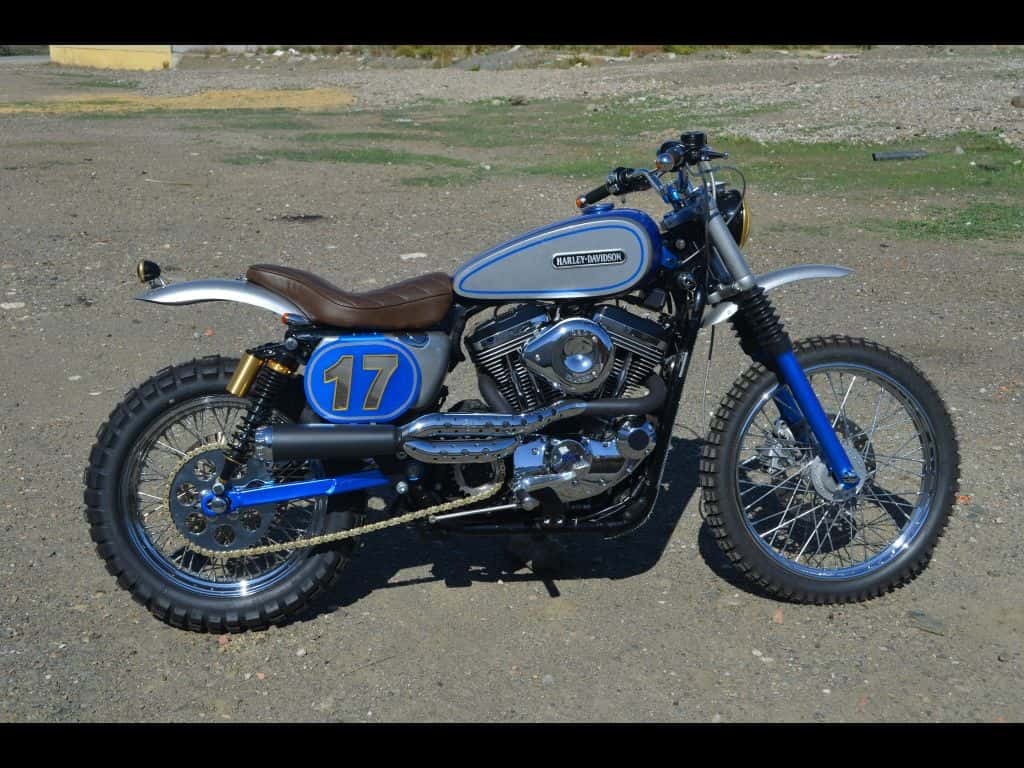
The Bultracker 17 also ended up in Belgium, as another client ordered it after seeing the results of the Ring 13.
Bultracker 17
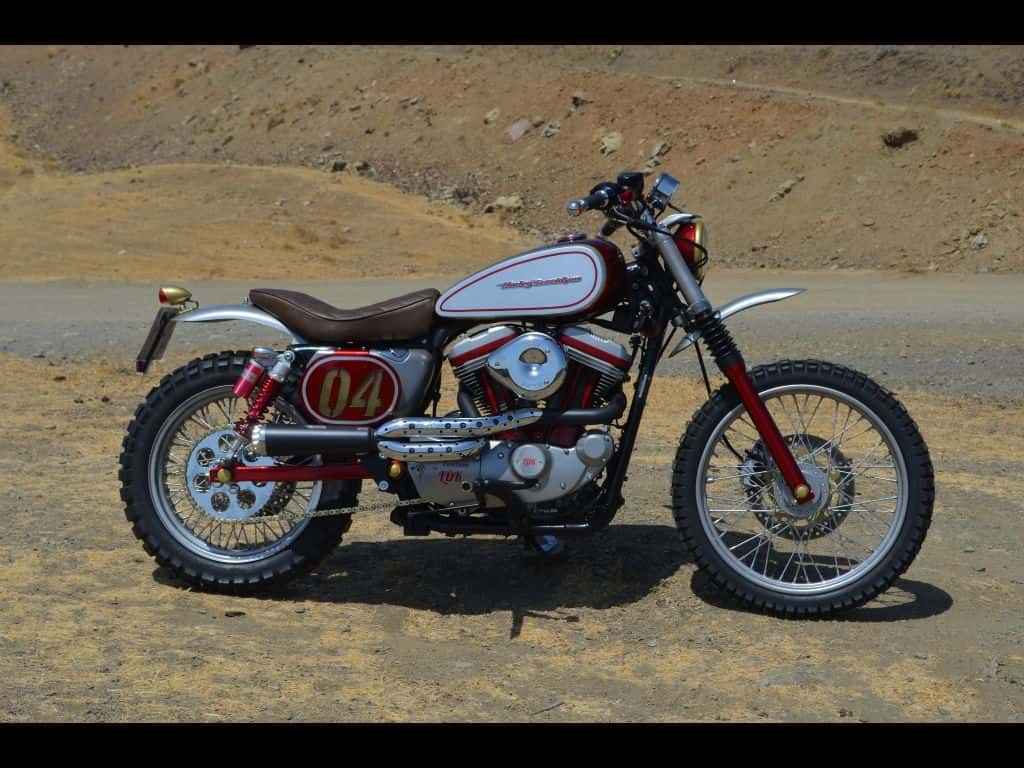
Another Harley dealership, this time in Malaga, commissioned the third Bultracker, the Bultracker 04 Siebla. The name Siebla comes from the name of the dealer and the number is for its fourth anniversary.
Bultracker 04 Siebla
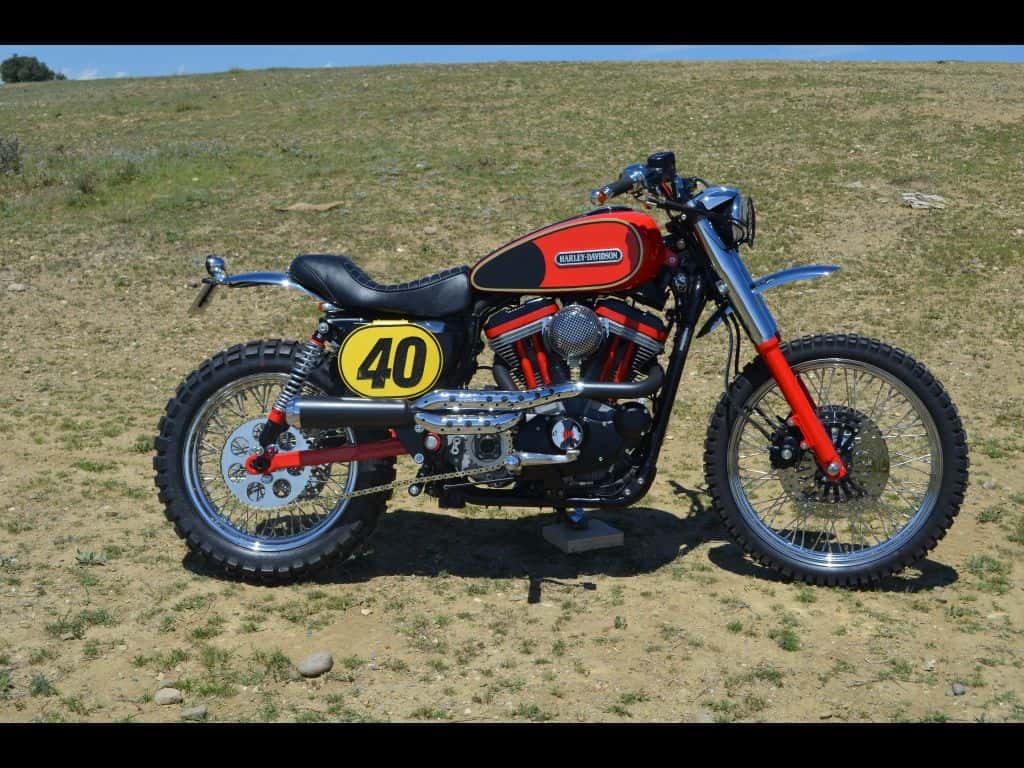
And so a great number of Scrambler models based on these Bultracker were happening over the years.
As you can see, each new Bultracker has a number assigned. This is not random, but has to do with a client request.
However, there was a Bultracker in which Fran Manen decided to self-dedicate it, baptizing it with his year of birth. This is the Bultracker 75.
Bultracker 75
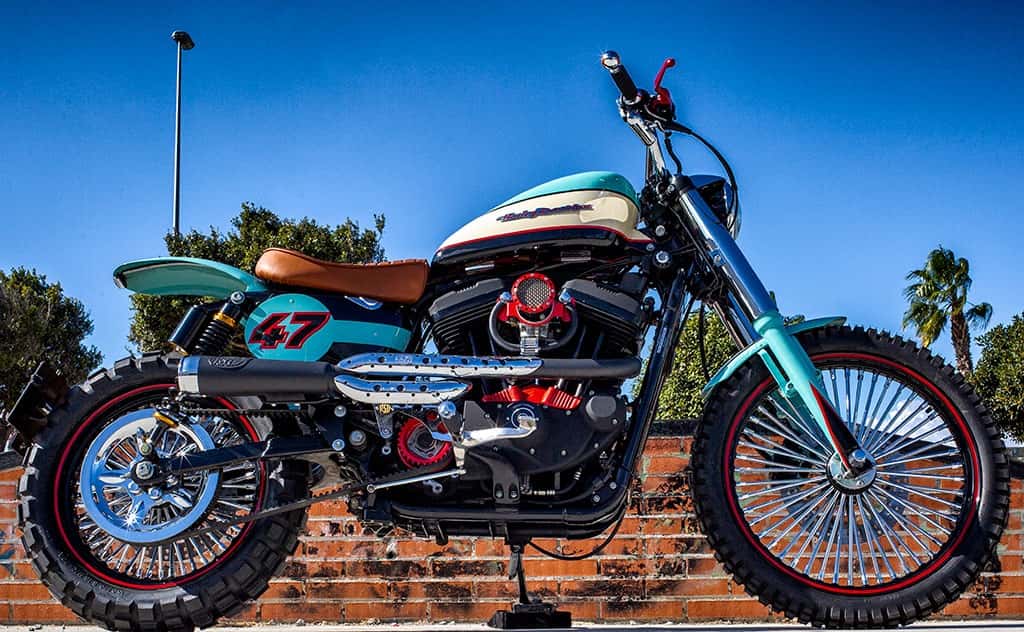
In 2019, the latest Bultracker model was realized so far. This is the Bultracker 47, a motorcycle that was based on the Soulbreaker at the request of the client, a great follower of Lord Drake Kustoms years ago. He also wanted this motorcycle to take the colors of the classic Harley-Davidson motorcycles.
Bultracker 47
HD Scramblers with a more modern or contemporary line.
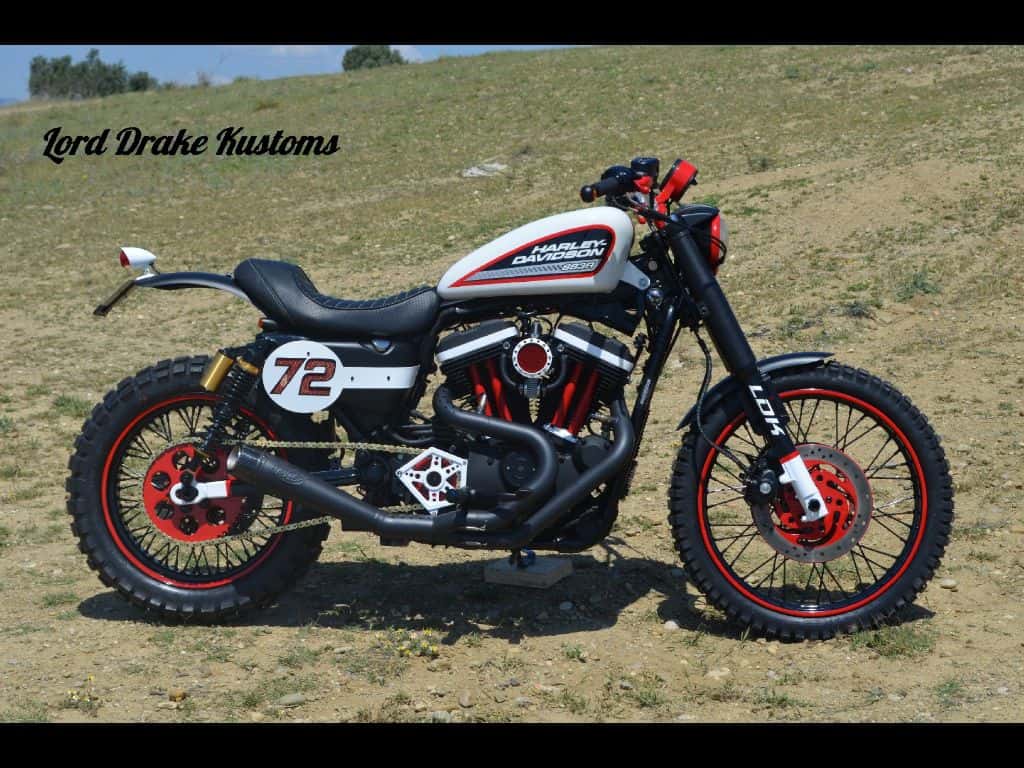
Finally, if we had to choose a couple of HD scrambler models outside the Bultrackers, maybe they would be Urbantracker and Seventy.
These two models presented more modern design lines, away from the retro style that the Bultrackers represented.
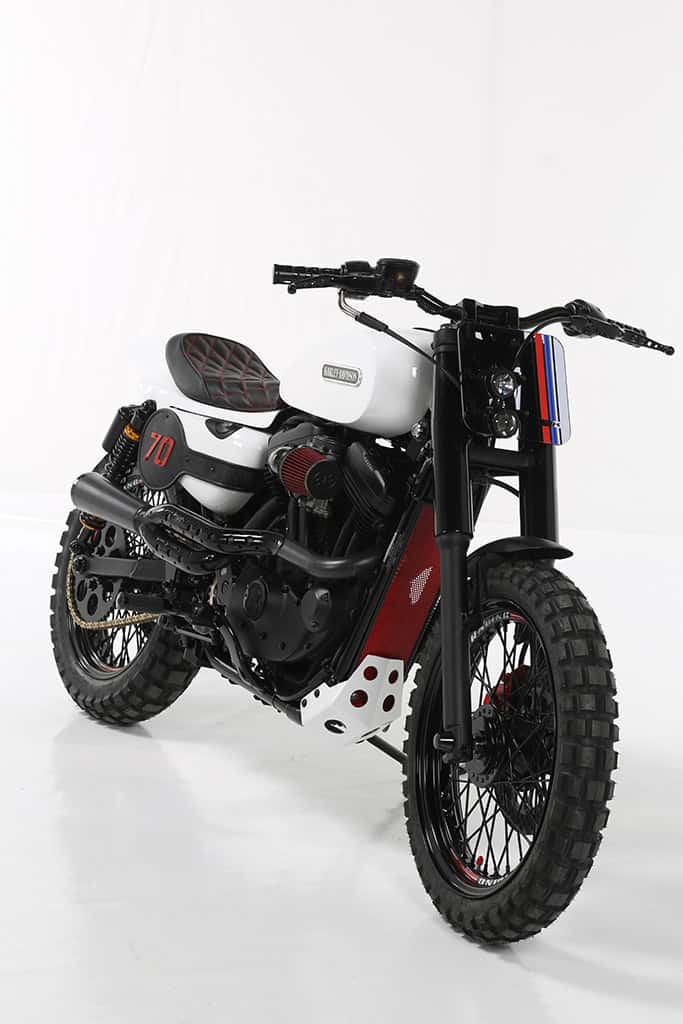
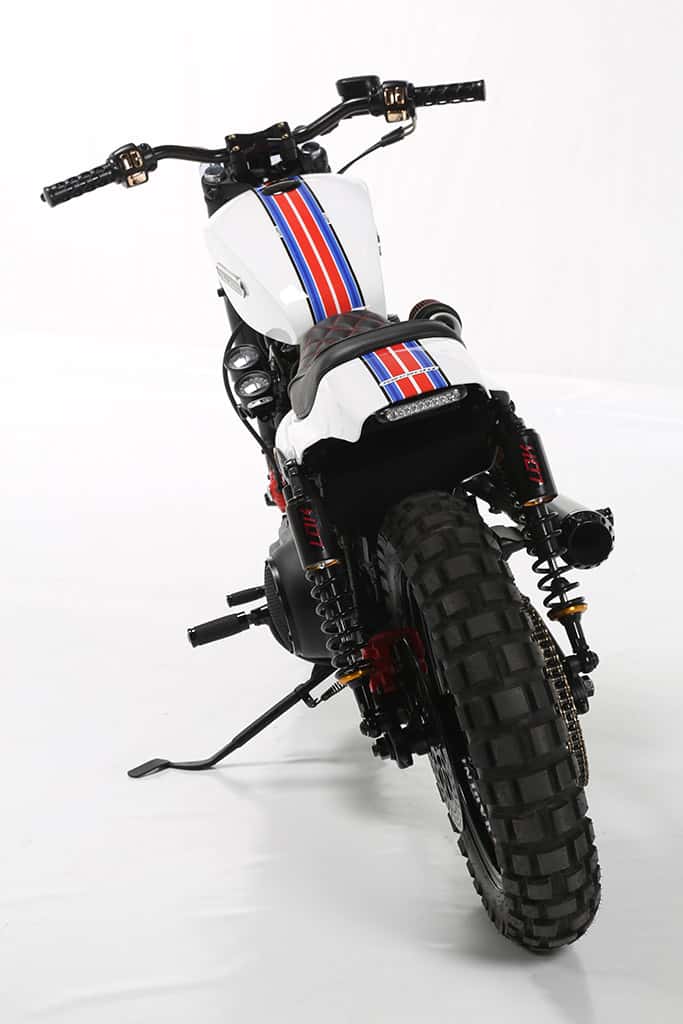
Seventy, is based on the design of rally racing cars between the 70s and 90s. Martini Rossi sponsored these rallies and that is why this motorcycle takes those characteristic three-color bands with blue, light blue and red.
Seventy front view
Seventy rear view
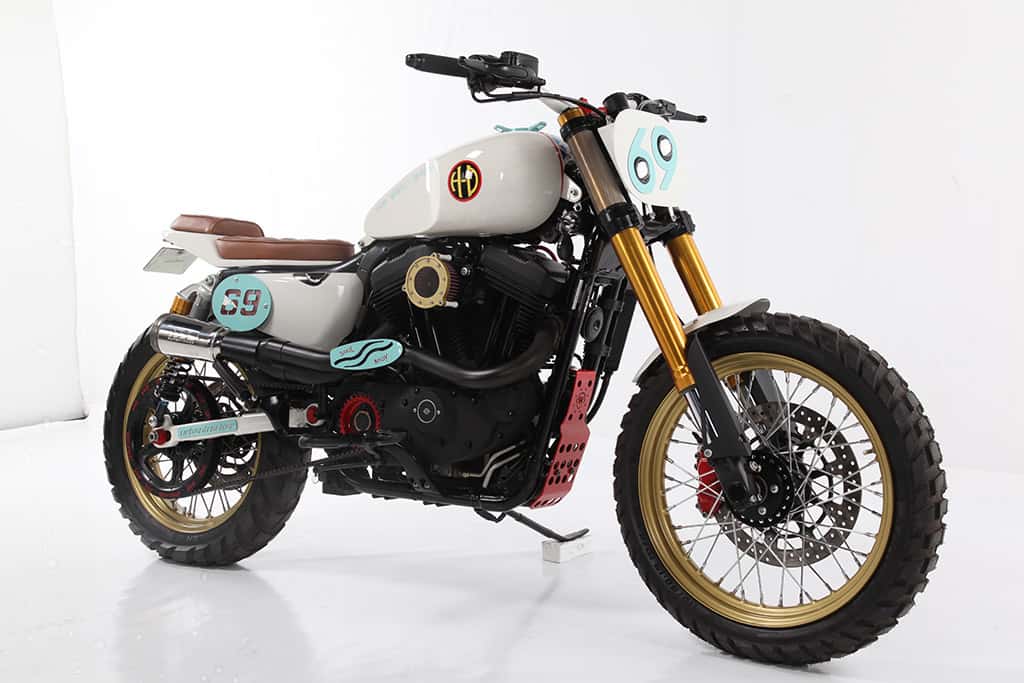
Urbantracker by his side, plays more with the surfer and Californian details. A motorcycle that could well be seen on the beaches of Malibu … and with that number …
Urbantracker
Both models were awarded at different Harley-Davidson festivals. Seventy won the 6th place in the modified Harley category at the AMD World Championchip held in 2018 in Cologne (Germany).
We are proud to see so many happy customers with their Scramblers out of our workshops at Lord Drake Kustoms. If we can assure you of anything, we will continue customizing scramblers in the future.
And you? Are you from Scrambler? What is your favorite model? Leave us your impressions in the comments.
Lord Drake Kustoms has extensive experience building Scrambler motorcycles from Harley-Davidson. You could say that they are a symbol of their brand due to the large number and quality of these custom bikes. In this article we will see how that idea came about (when nobody bet on it) and how it has evolved to this day.
A Harley Scrambler / Off Road
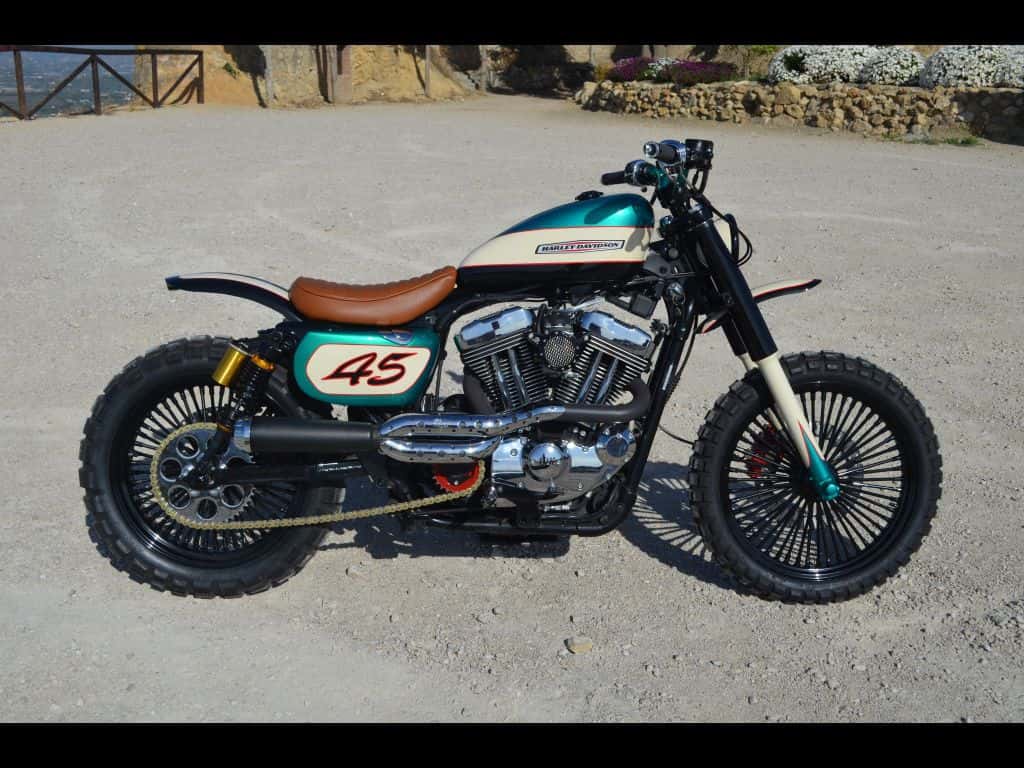
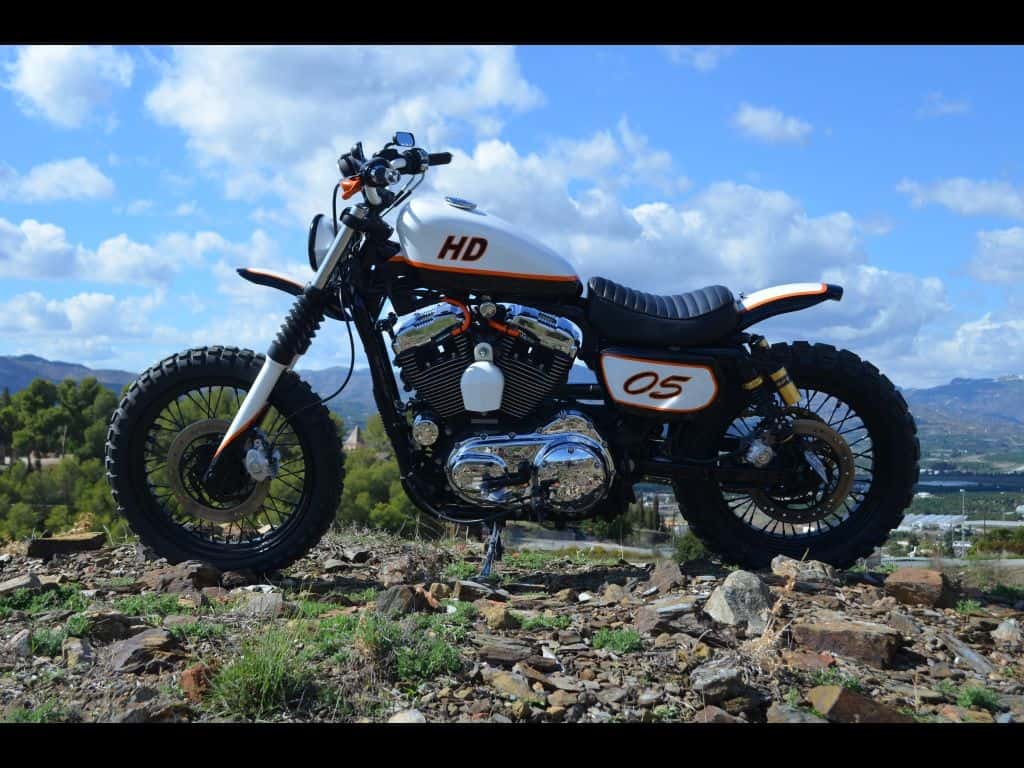
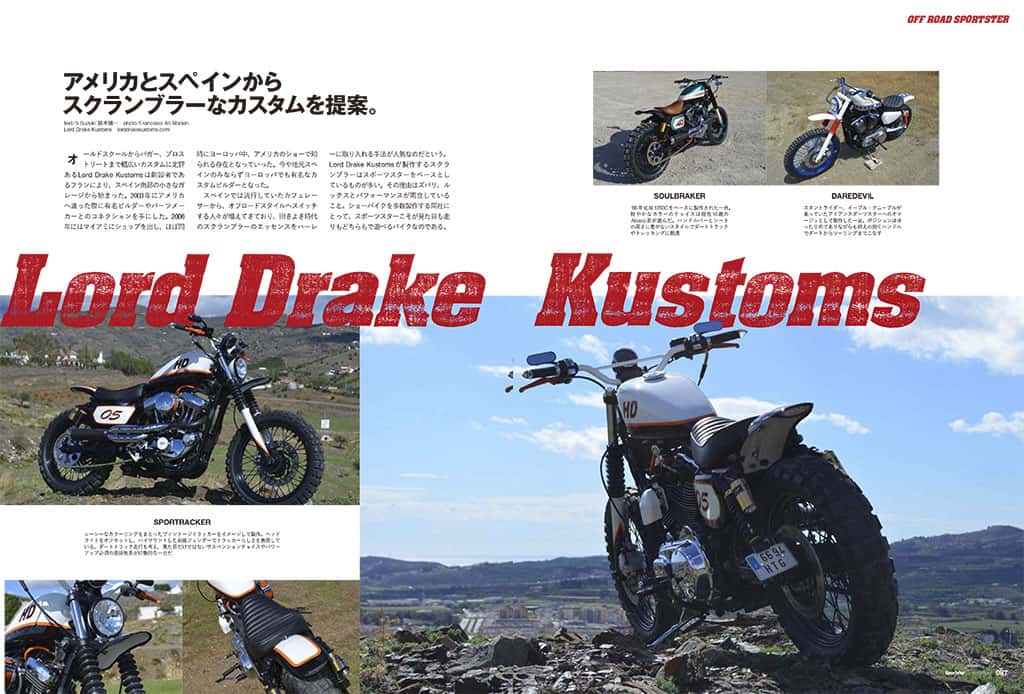
In 2014 and having just returned from Miami (USA) to open his new workshop in Malaga (Spain), Fran Manen decided to bet on a type of custom motorcycle almost nonexistent at that time. Tired of seeing custom Harley-Davidson motorcycles always in the same styles, he thought it would be great to be able to take your Harley-Davidson to the field. And so the idea was born that would lead him to modify a large number of Harley motorcycles in Scrambler style and would reap so much fame and prizes.
The Soul Breaker
The first Scrambler motorcycle he made was the “Soulbreaker”, named like that (soul-breaker) in homage to all those who thought such a project was impossible. All these bikes would be based on Harley-Davidson Sportster 883 or 1200 models. This scrambler won third place in the European Bike Shop held in Saint Tropez (France).
Soulbreaker, the first Harley scrambler of Lord Drake Kustoms.
Some time later this off road motorcycle continued with the Soulbreaker 2.
Soulbreaker 2, a successor of the original.
Sportracker, a harley scrambler more sporty and contemporary.
Just after the first Soulbreaker began working on a second scrambler motorcycle, this time with a more street and modern line. It was the Sportracker, a motorcycle also based on Harley XL models.
Sportracker, a scrambler with a more urban touch.
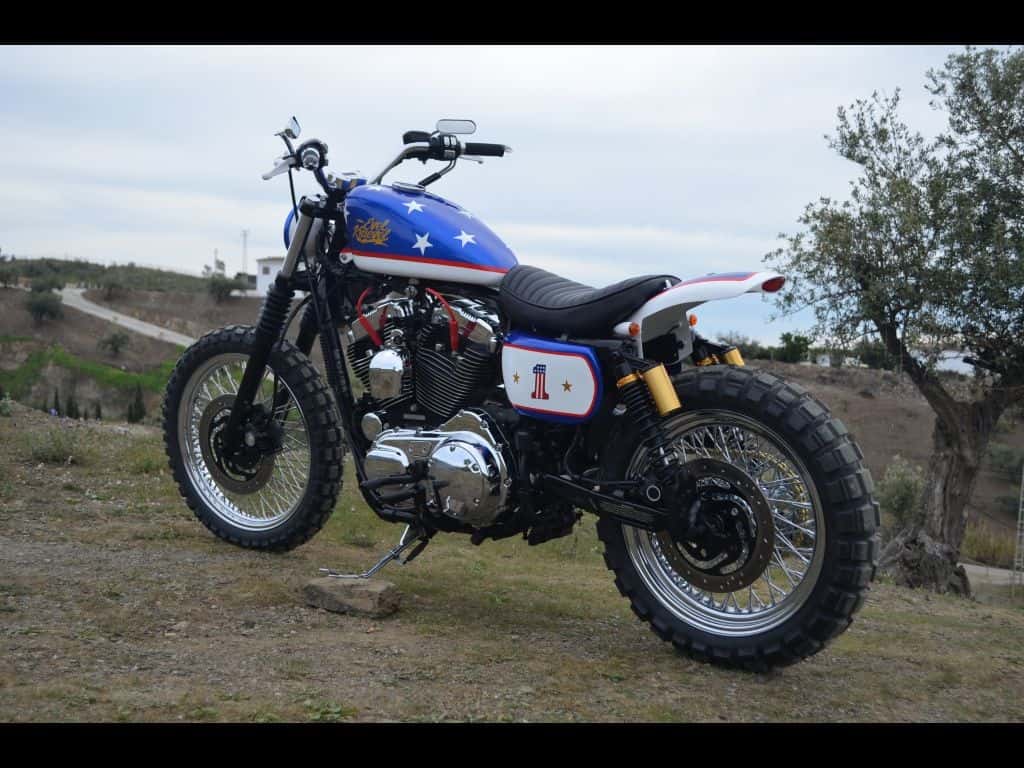
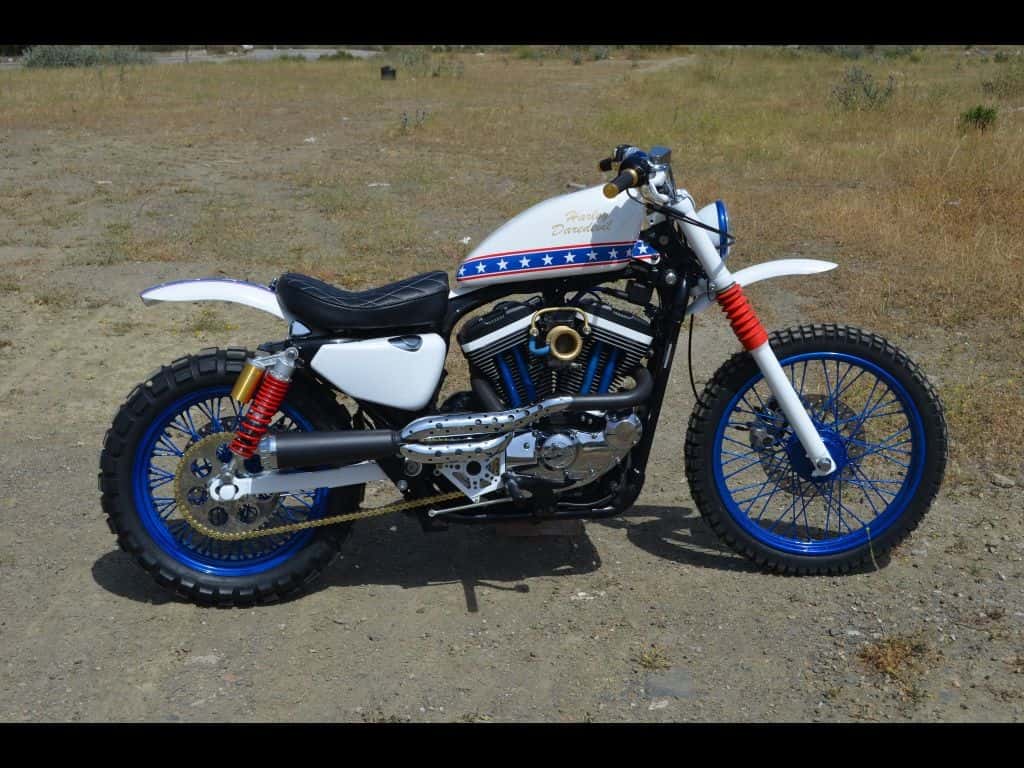
A tribute for Evel Knievel
One day, Fran Manen was making sketches of ideas about motorcycles and remembered the famous acrobatic motorcyclist Evel Knievel. It was then, as on many other occasions, that his son, who at that time was only 9 years old, helped him choose the colors. Fran sent the sketch to several clients and fans who followed him and had an interest in his motorcycles. And it was Michel, a Frenchman from the west coast of France, who quickly got in touch with Fran and said – “That’s the motorcycle I want!”
Soon, these first three motorcycles (Soulbreaker, Sportracker and Evel Knievel) became popular in such a way that they came to be considered by a Japanese magazine among the top 10 in the world in 2014.
Inside of Club Harley Magazine (Japan)
Soon more Scrambler bikes
So far the first chapter of this article about LDK Scrambler motorcycles, in a few days we will continue with the famous Bultracker. All a badge of Lord Drake Kustoms. Do not miss it!
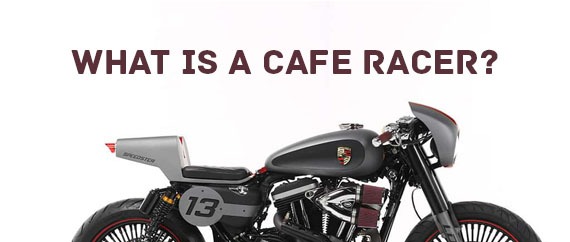
Cafe Racer is one of the most used terms in the world of custom motorcycles, but for a neophyte, it may be a bit confusing. In this article we will clarify the origin of these words and what are the main characteristics of this custom motorcycle style.
Where does the term Cafe Racer come from?
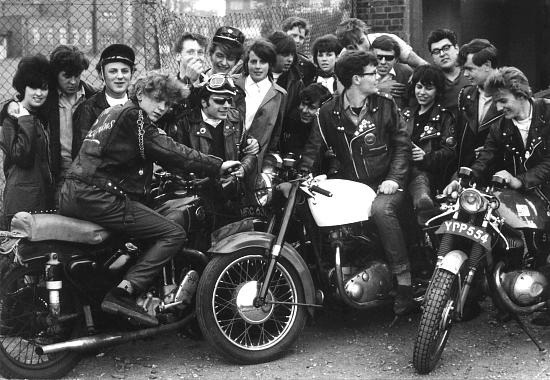
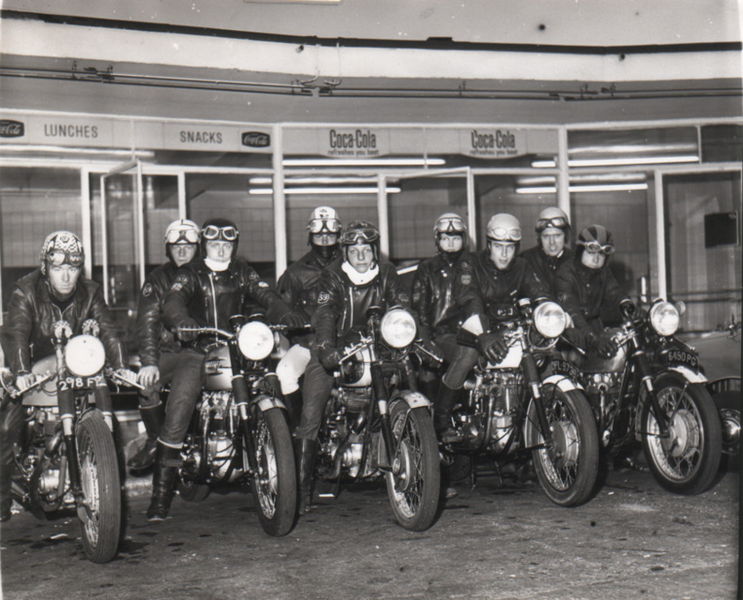
We have to go back to the 50s in the United Kingdom, specifically in its capital London. At that time an urban tribe known as the Rockers was born. They were young rebel lovers of Rock & Roll music and motorcycles.
His style is well known and was based on fashion prevailing in great actors of the time such as Marlon Brando or James Dean. Leather jackets usually full of studs and badges, jeans and boots.
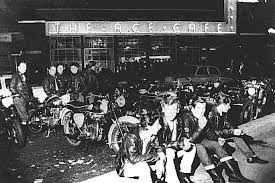
These young people frequented cafes to listen to their music and chat about the races on the Isle of Man. Some of those cafes are still active today as the famous Ace Cafe.
Ace Cafe (London)
Keep in mind that in those years Rock & Roll was not yet broadcast on radio stations and there were no concert halls for that music like today. So these young people depended on the Jukebox machines of certain coffees to be able to enjoy Chuck Berry, Elvis Presley or Buddy Holly.
Another important aspect of the Rocker culture was mobility. To move from Cafe to Cafe, they needed a fast and light means of transport. World War II was over a few years ago and some of these young people could afford to buy some new or used motorcycles. They modified these bikes to make them faster.
And from this point begins the legend of the term Cafe Racer. On the one hand it is logical to think that it arose naturally through these races between Cafe and Cafe. In fact, it is said that they did speed competitions to get from one cafe to another in the time that a song lasted on the Jukebox.
Another legend says that it was the truck drivers who stopped in those cafes (many of them on the road) who baptized those kids who challenged each other with the races. They used Cafe Racers disparagingly to refer to them. But little by little the Rockers adopted it for themselves.
At that time, a similar movement emerged in the United States that was based on modifying motorcycles used in war such as Harley-Davidson or Indian. From these customizations emerged the Bobber and Chopper styles.
Let’s see now how the transformations were to turn a motorcycle into Cafe Racer style.
Features of Cafe Racer motorcycles
As we have said before, the Rockers used motorcycles of the time that they modified to make them faster and lighter.
They were usually English motorcycles like Royal Enfield or Norton. These bikes were not designed to acquire high speeds, so they customized them to achieve precisely the opposite and be able to win in their races.
These were the changes they used to make to those bikes to gain more speed:
Get a classic motorcycle racing look, although they were designed for short distances.
Remove any unnecessary items, sacrificing comfort.
Modify the chassis to make the bike less heavy.
Change the engine for a more powerful one.
The tank used to change it for an elongated one (typical of the motorbikes of that time). They also used to adapt it in its shape to facilitate the comfort of the legs.
Trumpet style exhaust pipes.
The seats were single-seater, located in the tail and aligned with the tank.
The handlebars or semi-handlebars were short and low.
And the footrests were as far back as possible to get the pilot to have a position as aerodynamic as possible.
The evolution of Cafe Racer motorcycles
There was a time when this lifestyle and motorcycle fell into oblivion. This was mainly due to the lower prices of vehicles and the emergence of Japanese motorcycles, much more affordable.
However, a few years ago today, an interest in this culture and this style of motorcycle has been reborn again. That is why Cafe Racer is once again on everyone’s lips and has crossed borders all over the world.
But some things have changed compared to the originals. Any base is currently used to create Cafe Racer motorcycles. In addition, because today it is easier to get pieces, the styles are much more varied and mixed together.
The big brands have not wanted to be left behind and have also adapted to this style in some models. Both American and European or Asian brands have released models based on the Cafe Racer style. Or at least they have adopted elements of it.
The Cafe Racer motorcycles by Lord Drake Kustoms
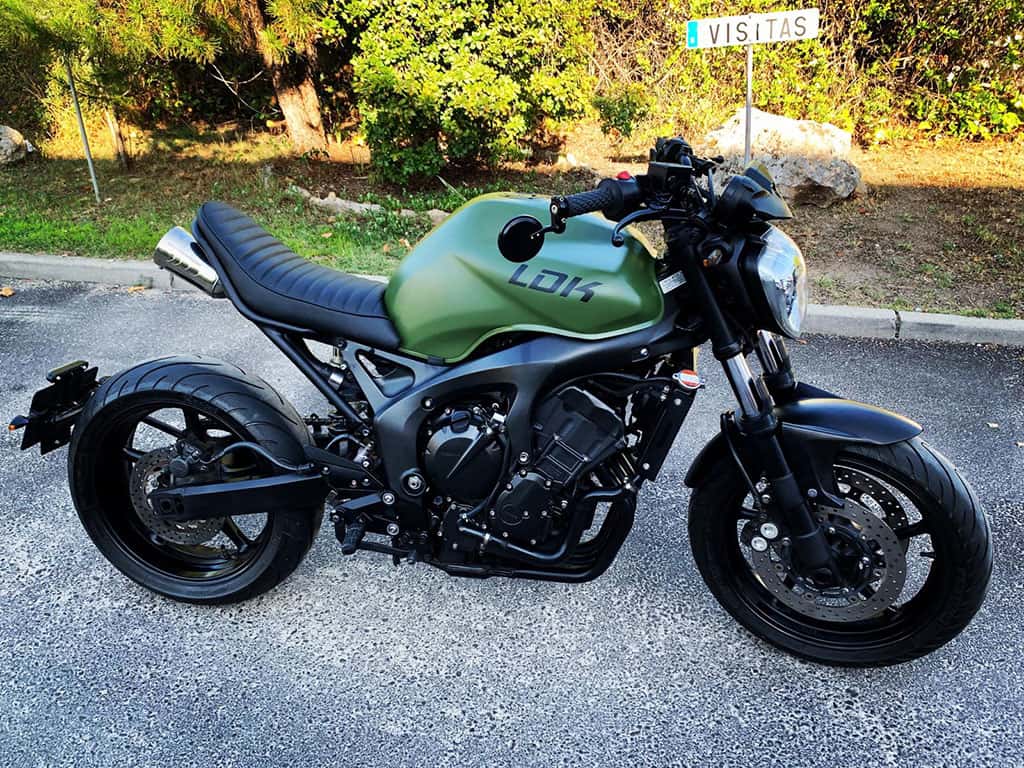
Lord Drake Kustoms is a Cafe Racer style motorcycle specialist. Throughout these years he has created and modified many of them from brands such as Harley-Davidson, BMW, Triumph, Ducati or Yamaha.
Here are some examples of these beautiful machines.
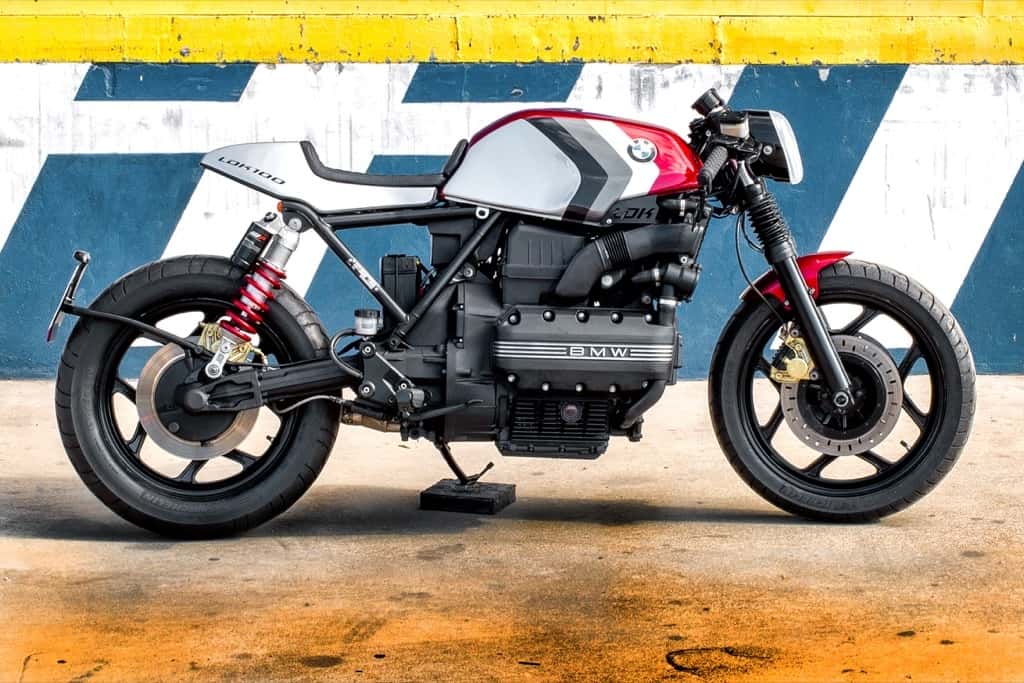
BMW K100 Racer
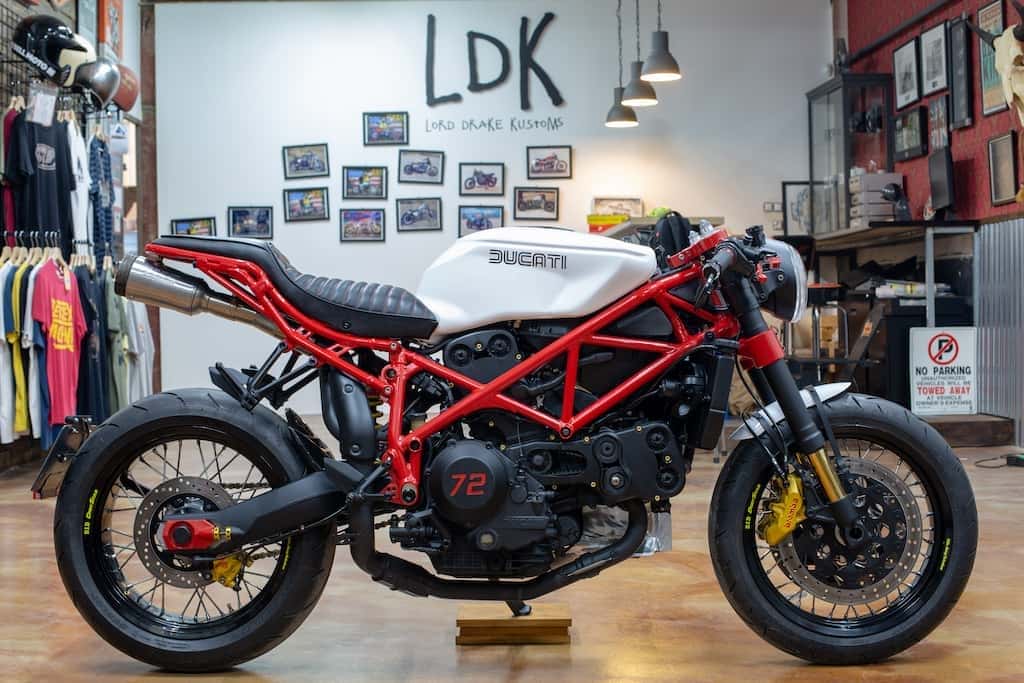
Ducati 999 “Neoracer”
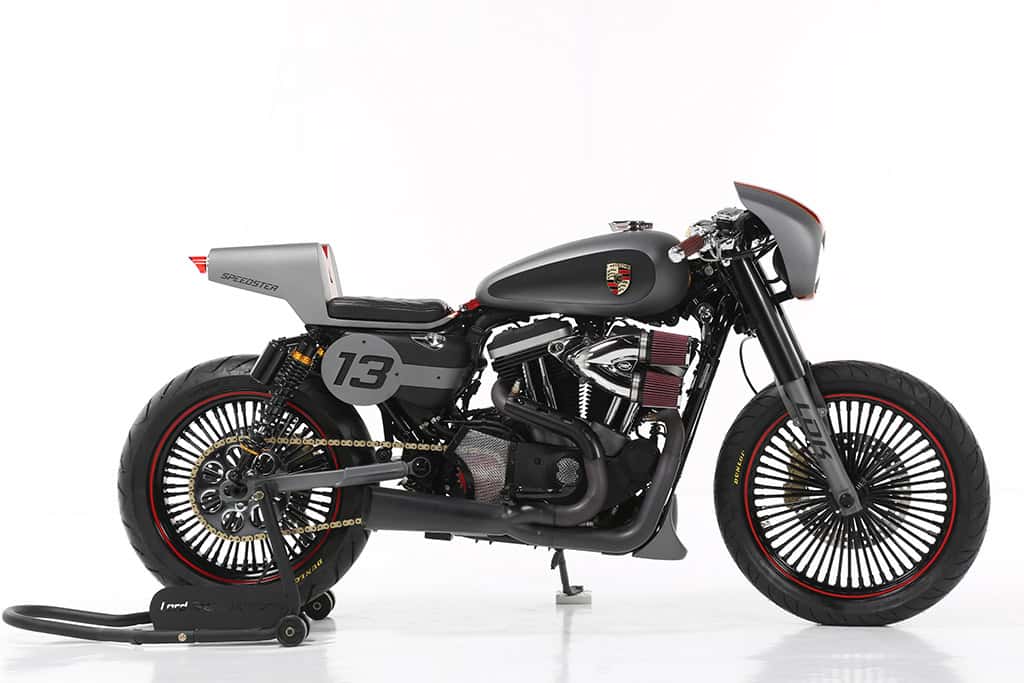
Speedster
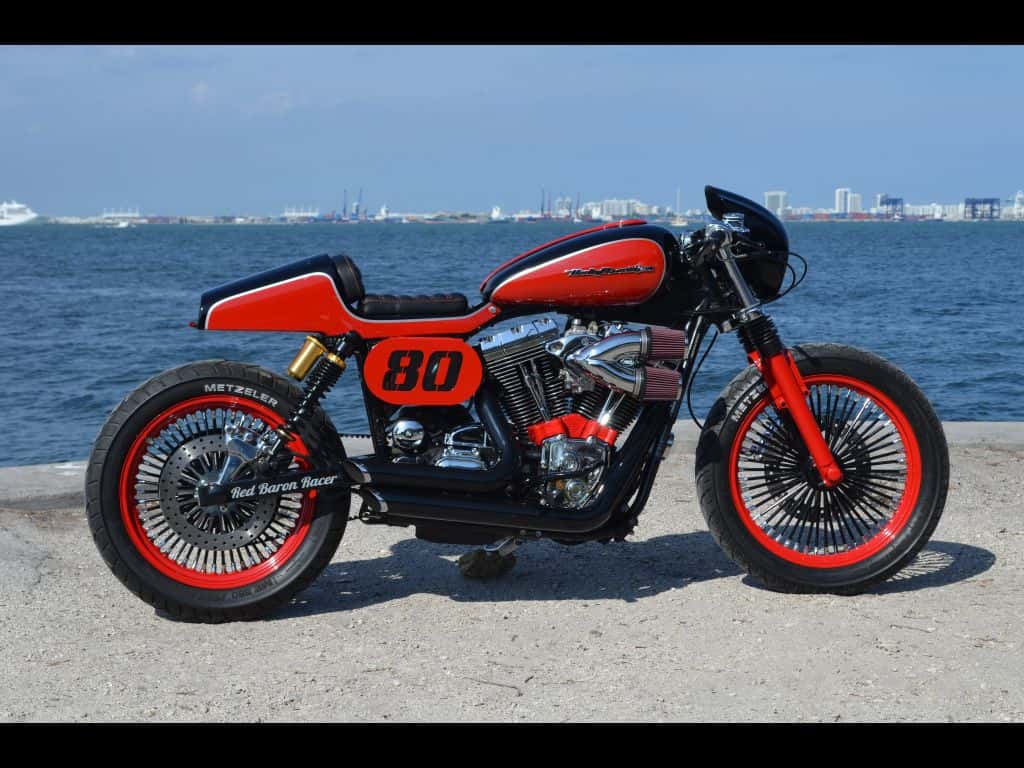
Dyna “Red Baron”
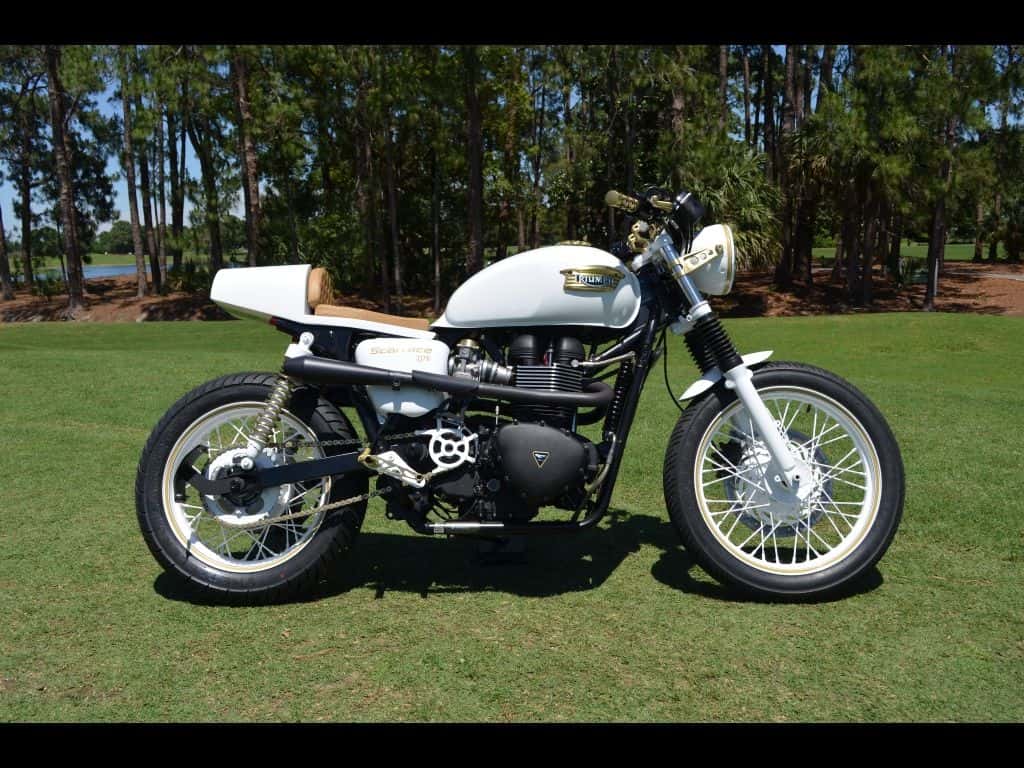
Scarface
Cafe Racer: an object of desire.
Finally, we could say that the Cafe Racer style has become a culture that unifies man and machine. A love for speed and Rock and Roll. For a more aggressive and far from established life. But above all, for an unconditional desire for a unique motorcycle.
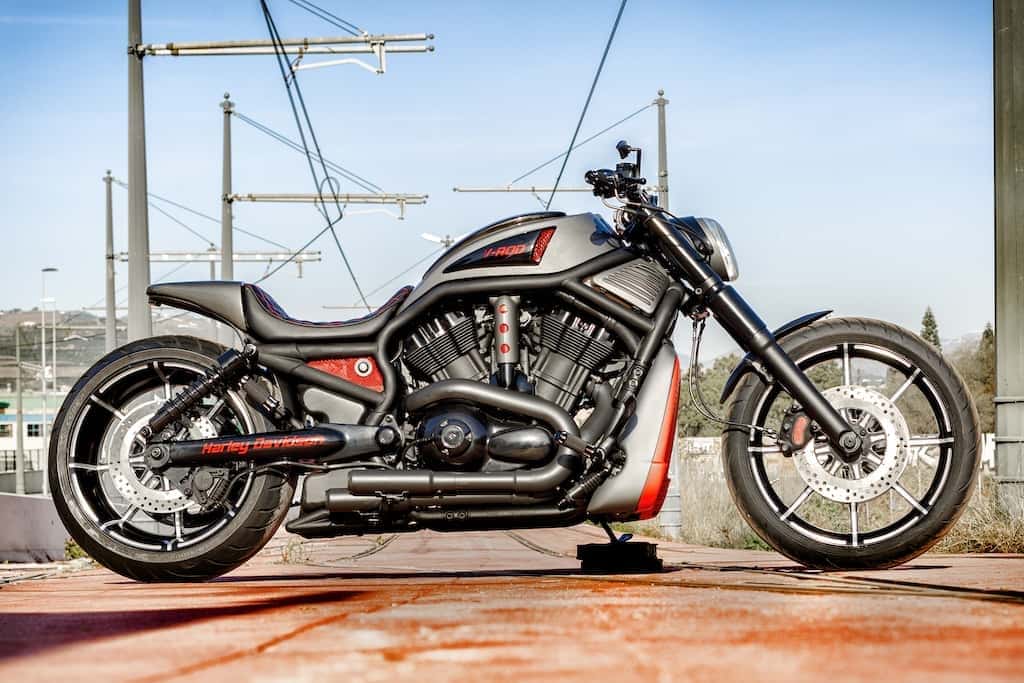
This 2019 has been a great year of production of custom motorcycles for LDK. Looking in perspective, we think it was an eternity ago when we worked on “V-Rod Oliver” in early 2019.
It was a work of customization from a Harley-Davidson V-Rod, the result you can see for yourself.
BMW R65 Cafe Racer
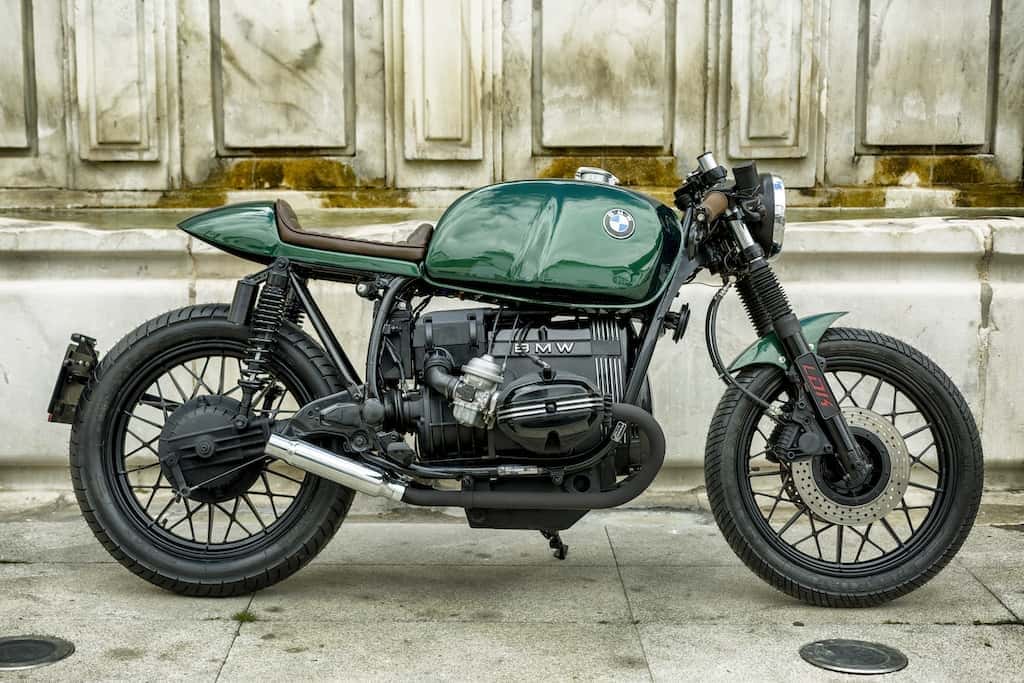
It wasn’t the first BMW we worked with, but it was the first of many of this 2019 and we presented it at the beginning of April. The transformation to Cafe Racer from this classic motorcycle of 1978 still enchants us with the result. That green (racing green) keeps catching us.
Sportster Black
The client that now owns this elegant Sportster Black arrived from the Canary Islands. We presented it in the month of May and did a customization job from a Harley Davidson Sportster 883 to a Bobber and Old School style.
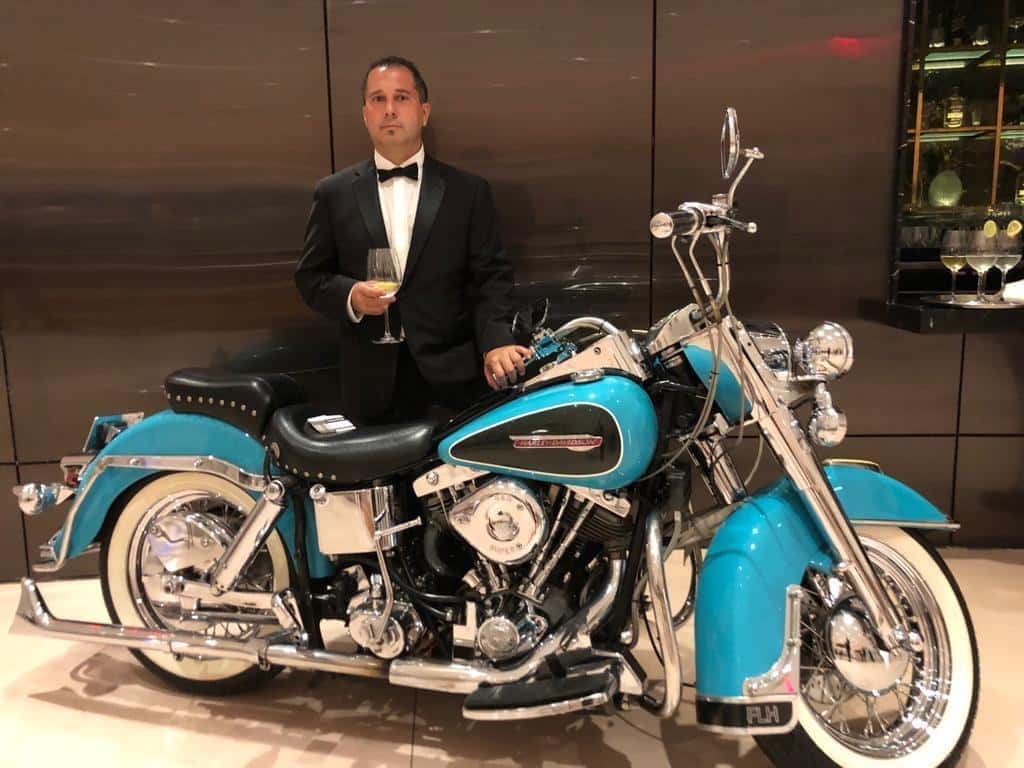
The first was a Harley Davidson Electra Glide Shovelhead from 1980 and based on a Vintage Classic.
Fran Manen with the Harley Davidson Electra Glide Shovelhead
The second is a Harley Davidson Sportster XL 1200 that was converted to a mixture of Cafe Racer and Bobber styles. We baptize her with the name of Rusty Rush.
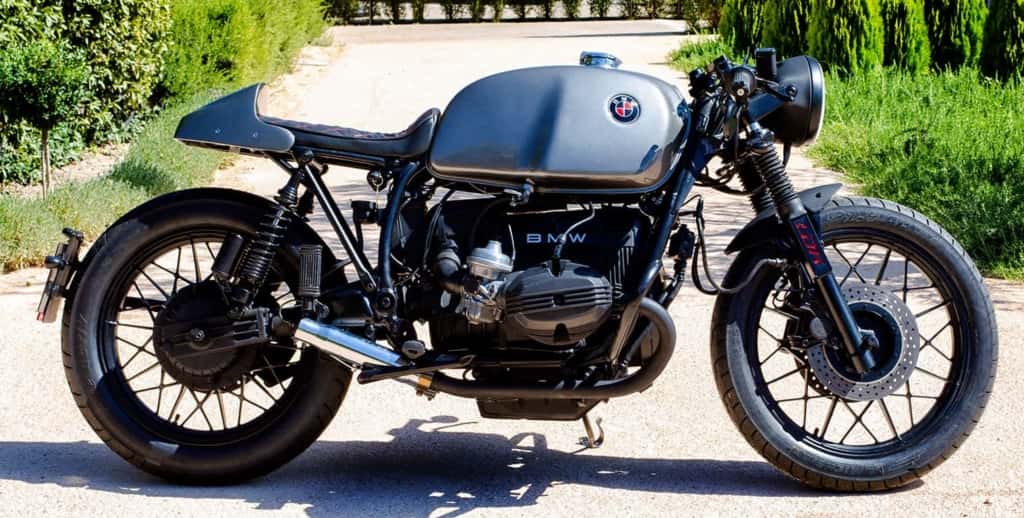
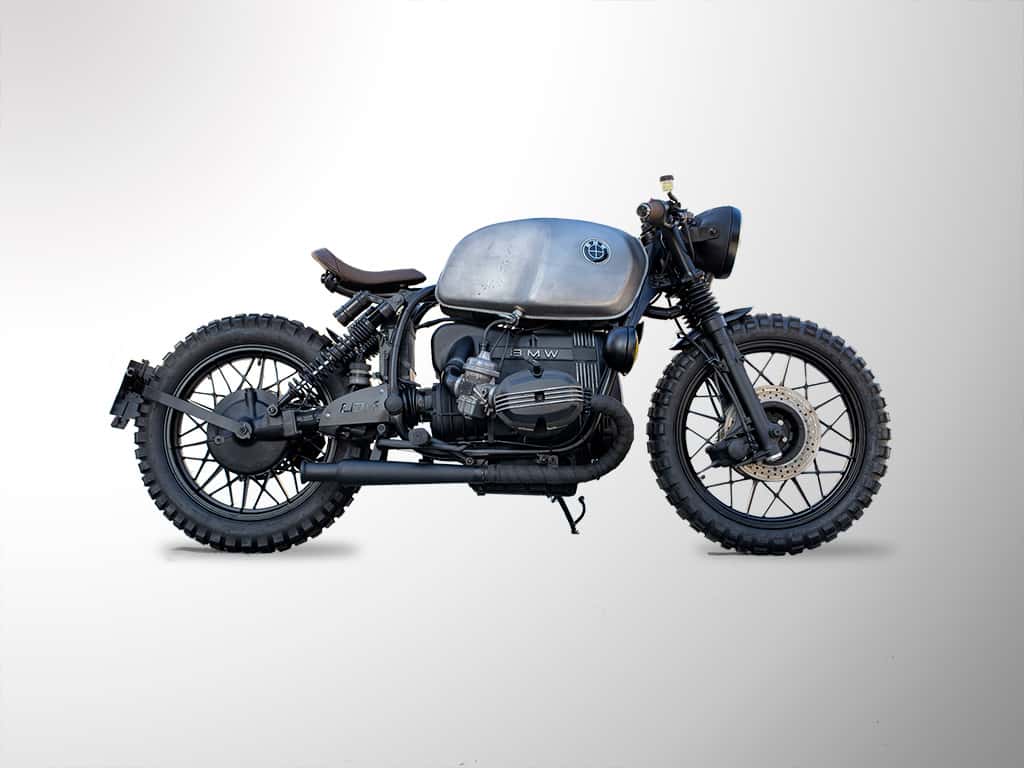
BMW R100 Cafe Racer
Our second BMW Cafe Racer this year (and there are still more). This time it was a commission from a client who wanted a motorcycle with style, so we opted for a silver finish that gave it that elegant touch.
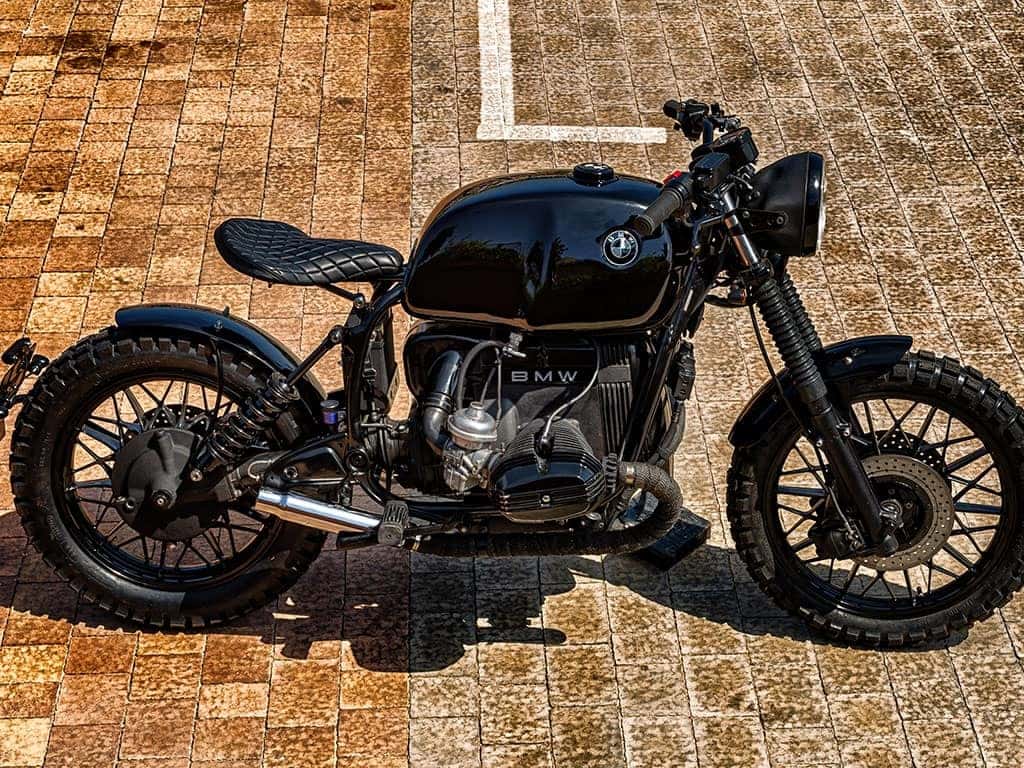
BMW R100 Scrambler
And we continue with our collection of BMWs of 2019. The client wanted a more Scrambler or Brat type motorcycle, so we got to work to create this custom motorcycle in black that ended up attracting all eyes.
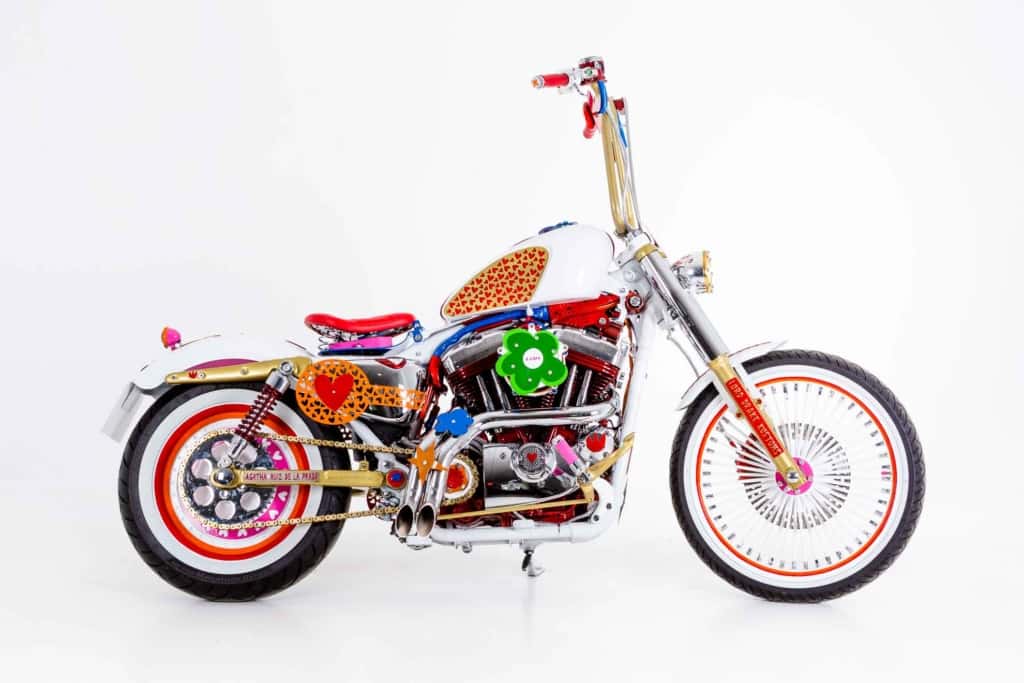
This project came about when Fran Manen coincided with Ágatha at the Miami Fashion Week. It was there talking when the idea of creating a Harley-Davidson based on the colors and shapes of the famous fashion designer was forged.
A couple of months later the motorcycle was ready and has not stopped generating controversy between the purists and the most daring. You may like it or not, but it is clear that it will attract attention.
Autumn began with this BMW, another Cafe Racer but this time based on the K model of the German brand. Specifically in a BMW K100 of 1984. Its shapes and colors make it spectacular.
BMW R100 CAFE RACER DM
The final result of this custom motorcycle contains lines of Cafe Racer, Bobber (or vintage) and a touch of Scrambler due to the used tires.
Bultracker 47
They have become a personal seal for Lord Drake Kustoms. Throughout his career, this customization company has made a multitude of Harley-Davidson Scrambler, also called Bultracker.
This year couldn’t be less and we have transformed this Bultracker 47 of which both its owner and we are very proud.
We have to confess that we had a great time with this project, especially when testing it cross-country. It is a very fun motorcycle that will delight its owner for sure.
And in 2020 much more …
Exactly, we are looking forward to showing you all the new custom bikes we are preparing.
Our goal is to surprise you even more in this new year that is about to begin.
So stay tuned and don’t give up … curves are coming!
The entire Lord Drake Kustoms team wishes you aHappy and biker year 2020!